At What Hour Does Fasting Start Burning Fat? The Real Timeline
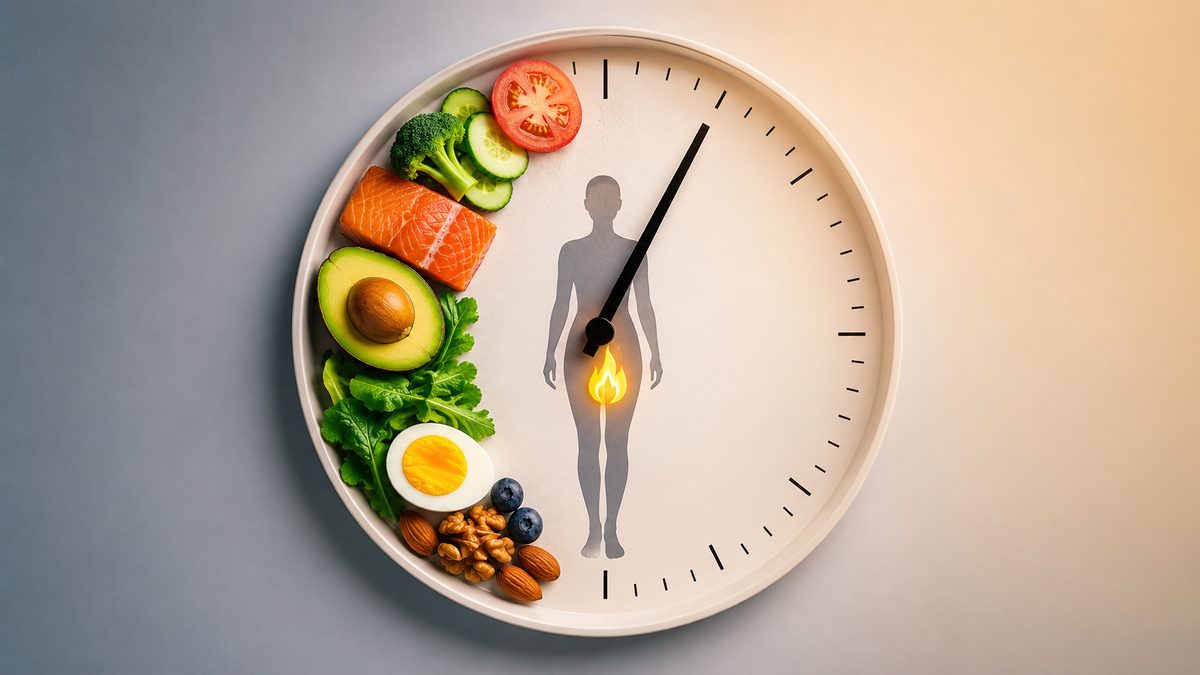
Fat burning starts around 8 to 12 hours into a fast for most people. But real, sustained fat mobilisation picks up after the 12 to 16 hour mark, once your liver glycogen is mostly gone and your body has no choice but to pull from fat stores.
A 12 hour overnight fast gets the process going. A 16 to 18 hour fast gives you several hours of active fat burning. The difference matters more than most people realise. Understanding the best fasting time for weight loss helps you choose the right protocol.
Here's what actually happens inside your body during a fast, hour by hour, and what you can do to make every fasting window count. Paramount Health
Why Your Body Does Not Burn Fat Straight Away
When you stop eating, your body doesn't immediately switch to fat. It works through a fuel hierarchy first.
Blood glucose gets used first. Then your liver breaks down stored glycogen to keep blood sugar stable, especially for your brain. Only once that glycogen supply runs low does your body start pulling seriously from fat stores.
The trigger for this shift is hormonal. As you fast, insulin drops. Glucagon rises. Catecholamines, growth hormone, and corticosteroids all increase. This hormonal cascade activates two key enzymes inside your fat cells: adipose triglyceride lipase (ATGL) and hormone-sensitive lipase (HSL). These enzymes break stored triglycerides apart into fatty acids and glycerol, which then enter the bloodstream as fuel.
At the same time, fasting suppresses lipoprotein lipase, the enzyme that normally pulls circulating fats into fat cells for storage. So fat storage slows down while fat release speeds up.
Most people underestimate how long this setup takes. The machinery is real. It just needs time to engage.
What Happens to Your Body After 12 Hours of Fasting?
At the 12 hour mark, most people have burned through the majority of their liver glycogen. Fat mobilisation is now the dominant process rather than a background one.
Your liver starts converting released fatty acids into ketone bodies. These are an alternative fuel your brain and other tissues can run on when glucose is scarce. Ketone production is a reliable signal that fat metabolism is fully engaged.
Insulin is at its lowest point of the day. Growth hormone is elevated, which helps preserve muscle while fat is being burned. The hormonal environment at hour 12 is about as favourable for fat loss as it gets without extending the fast further.
This is also when many people notice mental clarity, reduced hunger, and a slight increase in energy. That's not a coincidence. Ketones are a clean, efficient fuel source, and your body is now running on them.
Does Fasting Burn Fat or Muscle First?
Fat first, in most cases. The hormonal response to fasting is specifically designed to protect muscle while mobilising fat.
Growth hormone rises during fasting partly to preserve lean tissue. Your body preferentially breaks down triglycerides in fat cells rather than muscle protein, especially once glycogen is depleted and the fat-burning machinery is running properly.
Some muscle protein catabolism does happen in the early hours of a fast, mainly to provide amino acids for glucose production via gluconeogenesis. But this is a small contribution compared to fat oxidation, and it doesn't represent meaningful muscle loss in a healthy person doing a standard 16 to 24 hour fast.
Where muscle loss becomes a real concern is in very prolonged fasting (multiple days), severe caloric restriction without adequate protein, or fasting combined with heavy training without proper recovery nutrition. For a typical 16:8 intermittent fasting protocol, muscle preservation is well supported by the evidence.
How Long Does It Take to Enter Ketosis During Fasting?
Measurable ketosis typically begins around the 12 to 16 hour mark and deepens significantly between 16 and 24 hours.
The speed depends on a few things. If you ate a high-carbohydrate meal before your fast, your glycogen stores are full and it takes longer to deplete them. If your last meal was low in carbs, you may enter ketosis closer to the 10 to 12 hour mark.
Physical activity accelerates the process. A 20 to 30 minute walk in the morning burns through remaining glycogen faster and pushes you into fat-burning mode earlier. Combining a 16 hour fast with light morning movement is one of the most effective ways to maximise fat oxidation without any extreme measures.
Ketosis isn't an on/off switch. It's a spectrum. Light ketosis at hour 12 is different from deep ketosis at hour 24. For most fat loss goals, you don't need to chase deep ketosis. Getting into the 12 to 18 hour range consistently is enough to produce real results over time. meaningful fat loss
Is a 16-Hour Fast Enough to Burn Fat?
Yes. A 16 hour fast is enough to produce meaningful fat burning for most people.
By hour 16, glycogen is depleted, insulin is low, ketone production is active, and fat mobilisation has been running for several hours. This is the sweet spot that makes 16:8 intermittent fasting one of the most studied and practically sustainable fasting protocols.
The key word is sustained. A 12 hour fast gets fat burning started but doesn't give you much time in the fat-burning zone before you eat again. A 16 hour fast gives you roughly 4 to 6 hours of active fat mobilisation, depending on your individual metabolism and what you ate before the fast.
Extending to 18 or 20 hours adds more time in that zone, but the returns diminish and the adherence challenge increases. For most people, 16 hours done consistently beats 20 hours done occasionally.
One thing most articles miss: the meal you eat before your fast matters as much as the fast itself. A high-carb dinner refills glycogen and pushes your fat-burning window later into the next day. A lower-carb dinner means you hit the fat-burning phase earlier and spend more of your fast actually burning fat.
Does Drinking Water Break a Fast and Stop Fat Burning?
No. Water doesn't break a fast or stop fat burning.
Fat burning is driven by insulin levels and glycogen depletion, not by the presence of water in your stomach. Water has no caloric content, triggers no insulin response, and doesn't interfere with the hormonal cascade that drives lipolysis.
Staying hydrated during a fast actually supports fat metabolism. Lipolysis releases fatty acids and glycerol into the bloodstream, and adequate hydration helps your kidneys process the byproducts of fat oxidation efficiently.
Black coffee and plain tea are also generally considered fast-compatible for fat burning purposes. They contain negligible calories, and caffeine can mildly enhance lipolysis by stimulating catecholamine release. Adding milk, sugar, or cream does break the fast by triggering an insulin response.
The Two-Pathway Model Most People Have Never Heard Of
Recent research has identified something that changes how we think about fasting duration. Fat mobilisation doesn't run on a single mechanism. It runs on two.
The first pathway is fast. ATGL and HSL respond quickly to hormonal signals, especially adrenaline, and drive the initial burst of fat release in the early hours of a fast.
The second pathway is slower. It involves lysosomal acid lipase (LIPA) and a family of transcription factors called MiT/TFE. This lysosomal lipolysis pathway becomes dominant during prolonged fasting and handles the deeper mobilisation of fat stores that the fast pathway can't reach.
What this means practically: the first 12 hours of a fast activates the fast pathway. Hours 12 to 24 and beyond increasingly engage the slower lysosomal pathway. This is one reason why longer fasts produce disproportionately more fat loss than shorter ones. You're not just getting more time in fat-burning mode. You're activating a different, deeper mechanism entirely.
How to Get More Fat Burning From Every Fast
The timeline is predictable. What you do around it determines how much of that window you actually use.
- Eat low-carb before your fast. A lower-carb dinner depletes glycogen faster and moves your fat-burning window earlier. You don't need to go full keto. Reducing starchy carbs at your last meal is enough.
- Move in the morning. Light activity like a 20 to 30 minute walk burns through remaining glycogen and accelerates the shift to fat metabolism. You don't need intense exercise. Intensity can actually spike cortisol and slow fat mobilisation.
- Aim for 14 to 16 hours minimum. A 12 hour fast is a starting point. 14 to 16 hours is where consistent fat burning happens. Build up gradually if you're new to fasting.
- Stay hydrated. Water, black coffee, and plain tea support the process. Anything with calories or that triggers insulin ends the fast.
- Be consistent. The metabolic adaptations to fasting compound over time. People who fast regularly become more efficient at switching to fat metabolism. The first week is always the hardest.
FAQ
Does everyone start burning fat at the same time during a fast?
No. The 8 to 12 hour window is typical, but individual variation exists based on metabolic health, prior diet, sex, and fasting experience. People who regularly eat high-carb diets have fuller glycogen stores and take longer to deplete them. People who eat lower-carb or fast regularly tend to shift to fat burning faster.
Can you speed up fat burning during a fast?
Yes. Light physical activity, eating low-carb before the fast, and staying well hydrated all accelerate glycogen depletion and move you into fat-burning mode earlier. Cold exposure and caffeine have modest supporting effects through catecholamine stimulation.
Will a 12 hour fast every day produce fat loss?
It can, especially if you're coming from a pattern of constant eating. But 12 hours gives you a narrow window of active fat burning before you eat again. Extending to 14 to 16 hours consistently will produce more meaningful results over time.
Does fasting work differently for men and women?
There is evidence of sexually dimorphic hormonal regulation of fat metabolism during fasting. Women may experience different responses to extended fasting, particularly around hormonal cycles. The general timeline and mechanisms are the same, but women often benefit from starting with shorter fasting windows and adjusting based on how they feel.
Is it normal to feel hungry before fat burning kicks in?
Yes. Hunger typically peaks in the first few hours of a fast as ghrelin rises, then settles as the body shifts to fat metabolism and ketone production. Most people find that hunger at hour 14 is lower than hunger at hour 4. Getting through the early window is the main challenge.
Does the type of fat matter for how quickly it gets burned?
Visceral fat (around the organs) tends to be more metabolically active and responds faster to fasting than subcutaneous fat (under the skin). Both are mobilised during fasting, but visceral fat is often the first to go, which is one reason fasting is particularly effective for reducing waist circumference.
What to Do Next
Fat burning during fasting follows a predictable timeline. The first 8 to 12 hours are setup. Hours 12 to 16 are where real fat mobilisation happens. Beyond 16 hours, a second, deeper fat-burning pathway engages that most short fasts never reach.
The single most effective change you can make: extend your current fasting window by 2 hours and eat a lower-carb meal before you start. Do that consistently for two weeks and track how you feel, not just the scale.
If you want a structured approach built around your specific health goals, the team at Paramount Health can help you build a fasting and nutrition protocol that fits your life and gets results.
Sources

What snack is filling but not fattening?
Read article →
What can I eat that will fill me up but is healthy?
Read article →
How to reduce MS symptoms?
Read article →
Can fasting help autoimmune disorders?
Read article →
Does fasting help male fertility?
Read article →