What Is the Best Fasting Time for Weight Loss? (What the Research Actually Shows)
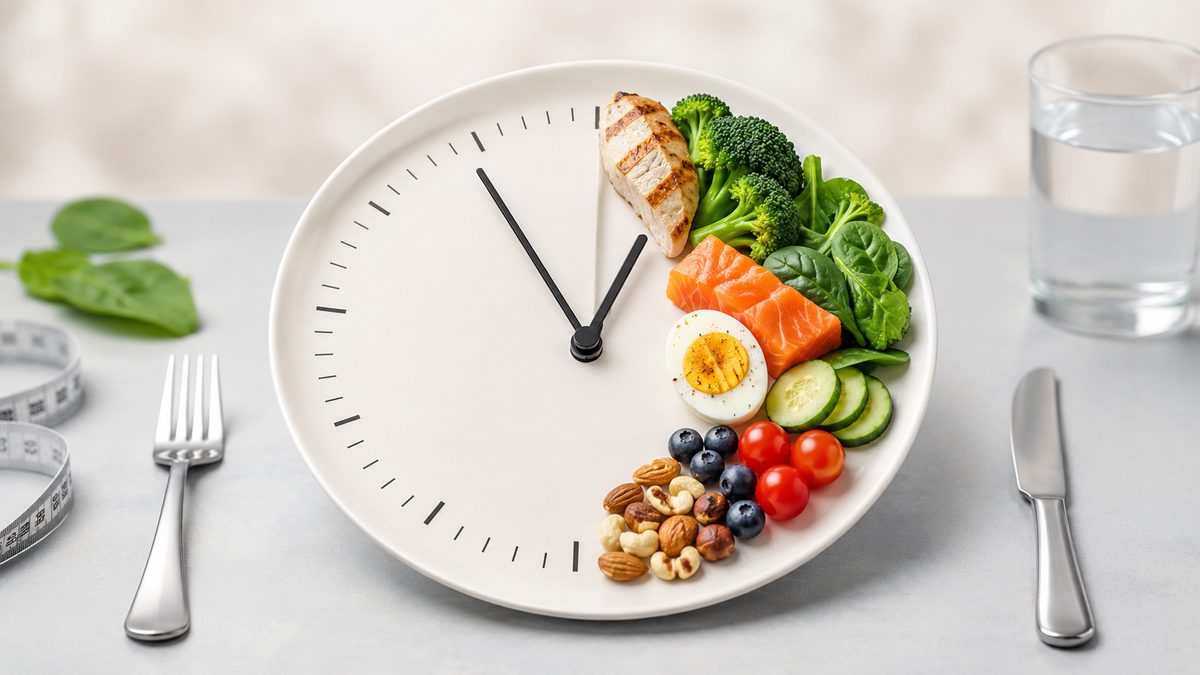
The best fasting window is whichever one you'll actually stick with. Research across dozens of trials confirms that 16:8, 5:2, and alternate-day fasting all produce similar weight loss when your total calorie intake is controlled.
The method matters far less than consistency. For most people, a 14 to 16 hour overnight fast with an eating window of noon to 8pm or 10am to 6pm is the practical starting point. Pair that with a 300 to 500 calorie daily deficit and you have the formula that works. Paramount Health
If you want fat loss, alternate-day fasting edges ahead in short-term fat loss. But it also has higher dropout rates. The protocol you abandon after six weeks loses to the one you maintain for six months, every time.
Does Fasting Duration Actually Affect How Much Weight You Lose?
Yes and no. Longer fasts can produce faster early results, but the difference shrinks over time. A 2023 meta-analysis of 24 randomised controlled trials found that alternate-day fasting ranked highest for weight loss, followed by continuous energy restriction, then time-restricted eating.
But the actual difference between methods was just 0.26 kg on average, which is not statistically significant.
What this means practically: you're not leaving meaningful fat loss on the table by choosing 16:8 over alternate-day fasting. You're choosing the method more people finish.
Longer-term data backs this up. A 2025 systematic review tracking outcomes at six months or more found intermittent fasting reduced body weight by 2.84 kg, fat mass by 3.06 kg, and waist circumference by 3.85 cm compared to control diets.
Those are real results. But continuous calorie restriction produced nearly identical numbers when total intake was matched. The fasting schedule is the vehicle. The calorie deficit is the engine.
Is 16-Hour or 24-Hour Fasting Better for Weight Loss?
16:8 is better for most people. Not because it burns more fat, but because people actually do it.
A 24-hour or alternate-day fast produces slightly more fat loss in the short term. The compliance data tells the real story. Trials shorter than three months show adherence above 80% for most fasting protocols.
Push past that and aggressive schedules start falling apart. People get hungry. Social life gets complicated. The protocol that looked great on paper becomes the one they quietly quit.
The practical rule: start with 16:8. If it feels effortless after four to six weeks, you can experiment with an 18-hour window or one 24-hour fast per week. Only push harder if the current level feels easy, not because you think more restriction means faster results.
One thing longer fasts do offer that shorter ones may not: better preservation of lean muscle mass and measurable reductions in inflammatory markers like interleukin-6. So if body composition matters to you beyond the number on the scale, there's a case for occasionally extending your window. But this only applies if you're actually doing the longer fast, not just planning to.
What Time Should You Start and Stop Fasting for Weight Loss?
Noon to 8pm is the most practical eating window for most people. It skips breakfast, keeps lunch and dinner, and aligns fasting with sleep. You're already fasting while you sleep, so a 16-hour window from 8pm to noon the next day requires skipping one meal, not two.
10am to 6pm works well if you train in the morning and need fuel earlier in the day.
The honest answer on morning versus night fasting: the evidence doesn't strongly favour one over the other for total weight loss. Some research suggests eating earlier in the day aligns better with circadian rhythms and may improve insulin sensitivity, but the effect size in real-world trials is modest.
What matters more is that your eating window fits your actual life. A window you can maintain on weekdays and weekends beats a theoretically optimal one you abandon by Thursday.
Is It Better to Fast in the Morning or at Night?
Fasting at night and into the morning is easier for most people because sleep covers the bulk of it. Skipping breakfast is a lower friction move than skipping dinner, which tends to be the most social meal of the day.
Early time-restricted eating (eating from 7am to 3pm, for example) has shown some metabolic advantages in controlled settings, particularly for blood sugar regulation. But in practice, finishing eating at 3pm is hard to sustain. Most people's social and work schedules make a later eating window far more realistic.
The best window is the one that causes the least friction in your specific life. If you have early morning meetings with food, shift your window earlier. If dinner with family is non-negotiable, protect that and push your fast into the morning.
How Many Days a Week Should You Fast to Lose Weight?
Daily time-restricted eating (like 16:8 every day) or two modified fasting days per week (the 5:2 approach) both work. The network meta-analysis of 99 trials found no single protocol clearly superior when calorie deficits were controlled.
For beginners, daily 16:8 is simpler to track and build into a routine. You eat in the same window every day, which removes decision fatigue.
The 5:2 approach, where you eat normally five days and restrict to around 500 calories on two non-consecutive days, suits people who prefer flexibility. You eat normally most of the week and accept two harder days. Some people find this easier psychologically. Others find the two restricted days derail the other five.
Alternate-day fasting, where you alternate between normal eating days and very low calorie days, produces the fastest short-term results but has the highest dropout rate. Reserve this for people who have already succeeded with a simpler protocol and want to accelerate.
What Most Articles Get Wrong About Fasting and Weight Loss
Three things come up repeatedly that the standard fasting content either misses or gets backwards.
1. The fasting window does not override your eating window. This is the most common mistake. People fast for 16 hours, then eat in a way that wipes out the deficit. A 2025 systematic review confirmed that when total calorie intake is matched between fasting and non-fasting groups, weight loss is nearly identical.
Fasting is a tool for reducing intake. It's not a metabolic override. If you're not losing weight on 16:8, track what you eat during your eating window. The answer is almost always there.
2. Stricter is not always better. Most fasting content pushes people toward longer and longer windows as if more restriction equals more results. The data doesn't support this. Compliance drops sharply on aggressive protocols after three months, and a protocol you quit produces zero long-term results.
The goal is the longest fast you can sustain indefinitely, not the longest fast you can survive for a month.
3. Fasting has real metabolic benefits beyond weight loss, but only if you actually do it. Longer fasting windows (16 hours or more) show measurable reductions in fat mass percentage, waist circumference, and inflammatory markers like interleukin-6 compared to continuous calorie restriction.
These are meaningful benefits. But they only materialise if you maintain the protocol. A theoretical 18-hour fast you do three times before quitting delivers none of them.
How to Set Up Your Fasting Window (Step by Step)
- Pick a 14 to 16 hour window that fits your schedule. Noon to 8pm works for most people. Adjust based on your morning and evening commitments.
- Calculate your calorie target. Fasting alone rarely creates a large enough deficit. Aim for 300 to 500 calories below your maintenance level during your eating window.
- Run the same window every day for four weeks. Consistency builds the habit. Varying your window daily adds friction and makes it harder to track.
- Assess at four weeks. If it feels effortless and you're losing weight, keep going. If it feels effortless but weight is stalling, check your calorie intake. If it feels unsustainable, shorten the window rather than quitting entirely.
- Only extend if the current level is easy. Move from 14 to 16 hours, or add one 24-hour fast per week, only when the current protocol feels like no effort at all.
FAQ
What is the best fasting window for losing weight?
16:8 (16 hours fasting, 8 hours eating) is the best starting point for most people. It's effective, sustainable, and has strong compliance data. Alternate-day fasting produces slightly faster initial results but has higher dropout rates.
Is a 16-hour or 24-hour fast better for weight loss?
For total weight loss over six months or more, the difference is minimal. A 24-hour fast may accelerate early fat loss but is harder to maintain. Start with 16 hours and only extend if it feels easy.
What time should I start and stop fasting?
Noon to 8pm is the most practical window for most people. It aligns fasting with sleep, keeps dinner intact, and only requires skipping breakfast. Adjust based on your schedule and training times.
Does fasting duration affect how much weight you lose?
Slightly in the short term, but not significantly over six months or more when total calorie intake is matched. Duration influences how quickly you lose fat early on. Total calorie deficit determines how much you lose overall.
Is it better to fast in the morning or at night?
Fasting overnight and into the morning is easier for most people because sleep covers the majority of the fast. Early eating windows may offer modest metabolic advantages, but the compliance benefit of a later window outweighs this for most people.
How many days a week should I fast?
Daily 16:8 or the 5:2 method (two restricted days per week) both produce results. Daily fasting is simpler to build into a routine. 5:2 suits people who prefer flexibility during the week. Both work when you maintain a calorie deficit.
Why am I not losing weight on intermittent fasting?
Almost always, total calorie intake during the eating window is too high. Fasting doesn't create a deficit automatically. Track what you eat for one week and compare it to your maintenance calories. The gap between what you think you eat and what you actually eat is usually the answer.
Your Next Step
Pick a 16-hour window that fits your schedule, calculate your calorie target for the eating window, and run it consistently for four weeks before changing anything. Most people overcomplicate this.
The protocol that works is the one you do every day, not the one that looks best on paper.
If you want support building a fasting and nutrition plan around your specific goals, the team at Paramount Health can help you put the right structure in place from the start.
Sources

What snack is filling but not fattening?
Read article →
What can I eat that will fill me up but is healthy?
Read article →
How to reduce MS symptoms?
Read article →
Can fasting help autoimmune disorders?
Read article →
Does fasting help male fertility?
Read article →