Does Fasting Raise or Lower PSA? What the Evidence Actually Shows
Fasting does not raise or lower PSA in any meaningful way. A population study of 157,276 men found no statistically significant relationship between fasting duration and serum PSA concentration. Your PSA result won't change whether you eat breakfast before your blood draw or fast overnight.
The things that actually move your numbers are ejaculation, prostate manipulation, and active infection.
Why Men Ask This Question
Most men get PSA tests alongside a standard lipid panel, which requires fasting. So they show up fasted and assume the fast applies to PSA too. fasting because they want a lower result before a test.
Both groups are solving a problem that doesn't exist.
The confusion is understandable. PSA is sensitive to several lifestyle factors, so it seems reasonable that food intake might be one of them. The evidence says otherwise.
Does Fasting Affect Your PSA?
No. The largest study on this question analyzed PSA results from 157,276 men tested at Calgary Laboratory Services between 2010 and 2012. Researchers compared PSA levels across the full range of fasting durations, from non-fasted to prolonged fasting states.
The result was clear: fasting time had no statistically significant effect on serum PSA.
The reason makes biological sense. PSA is produced by prostate epithelial cells in response to androgenic stimulation and the structural architecture of prostate tissue. It's not a metabolic marker. Caloric restriction doesn't trigger or suppress its release. Your prostate doesn't know or care whether you had eggs for breakfast.
Fasting changes blood glucose, insulin, triglycerides, and several other markers. PSA is simply not on that list.
What Actually Raises PSA Before a Blood Test
If you want an accurate PSA result, these are the factors worth controlling.
Ejaculation
Ejaculation temporarily raises PSA. The prostate contracts during orgasm, which can push PSA into the bloodstream. Most guidelines recommend avoiding ejaculation for 48 hours before a PSA test.
In my experience talking to men about this, it's the most commonly overlooked variable and the most likely to cause a falsely elevated result.
Prostate Examination
A digital rectal exam (DRE) can elevate PSA for several days. If your doctor performs a DRE at the same appointment as your blood draw, ask to have the blood taken first.
Waiting at least a week after a DRE before testing is the safer approach.
Active Infection or Inflammation
Prostatitis, urinary tract infections, and even vigorous cycling can raise PSA significantly. If you have any symptoms of infection, postpone the test until you've recovered.
Testing during active inflammation produces results that are hard to interpret and may trigger unnecessary follow-up procedures.
Vigorous Exercise
Heavy exercise, particularly cycling or anything that puts direct pressure on the perineum, can temporarily elevate PSA. A rest day before your test is a reasonable precaution if you train hard.
Is Ejaculating Every Day Good for Your Prostate?
The evidence here is more nuanced, but the direction is positive. Several studies have found that higher ejaculation frequency is associated with a prostate cancer over time. One frequently cited analysis found that men who ejaculated 21 or more times per month had a lower risk of prostate cancer compared to men who ejaculated four to seven times per month.
The proposed mechanism is that regular ejaculation flushes the prostate ducts, reducing the buildup of potentially carcinogenic substances and lowering chronic inflammation. Whether daily ejaculation is the optimal frequency isn't established, but the data doesn't support the idea that frequent ejaculation harms the prostate.
For PSA testing specifically, the practical takeaway is simple: abstain for 48 hours before the test, then resume normal activity.
What Is the Average PSA for a 70 Year Old?
PSA rises with age because the prostate naturally enlarges over time, even without cancer. Age-specific reference ranges exist for this reason.
- Ages 40 to 49: 0 to 2.5 ng/mL is generally considered normal
- Ages 50 to 59: 0 to 3.5 ng/mL
- Ages 60 to 69: 0 to 4.5 ng/mL
- Ages 70 and older: 0 to 6.5 ng/mL
For a 70 year old, a PSA under 6.5 ng/mL is within the age-adjusted normal range. A result of 4.0 ng/mL that would prompt concern in a 45 year old is unremarkable in a 70 year old.
But the absolute number is only part of the picture. PSA velocity, meaning how fast the number is rising year over year, often matters more than a single reading. A PSA that jumps from 3.0 to 5.5 in 12 months warrants more attention than a stable 5.8 measured over several years.
Your doctor will also consider PSA density (PSA relative to prostate volume) and free versus total PSA ratio when interpreting results. A single number without context is rarely the whole story.
How Can I Lower My PSA Before a Blood Test?
This is one of the most searched questions on this topic, and it deserves a straight answer. You can't meaningfully lower your PSA in the days before a test through diet, supplements, or fasting.
What you can do is avoid the things that artificially raise it.
The practical checklist before a PSA test:
- No ejaculation for 48 hours before the draw
- No prostate exam or catheterization in the week prior
- No vigorous cycling or perineal pressure activities for 24 to 48 hours
- Postpone if you have any active urinary or prostate infection
- Eat or fast as you normally would. It doesn't matter
If your PSA comes back elevated and you didn't follow these precautions, ask your doctor about retesting before proceeding to biopsy. A repeat test under controlled conditions often resolves the question.
The Angle Most Articles Miss: PSA Is a Screening Tool, Not a Diagnosis
Most content about PSA focuses on the number. What gets less attention is how easily that number gets misread in both directions.
An elevated PSA doesn't mean cancer. Benign prostatic hyperplasia (BPH), prostatitis, and the temporary factors listed above all raise PSA without any malignancy present. Roughly 75% of men with elevated PSA who undergo biopsy don't have prostate cancer.
A normal PSA doesn't rule out cancer either. Aggressive prostate cancers can exist in men with PSA levels under 4.0 ng/mL. This is why PSA is used alongside other assessments, not as a standalone verdict.
Understanding this changes how you approach the test. The goal isn't to game the number. The goal is to get an accurate baseline reading, track it over time, and use it as one input among several.
What Lifestyle Factors Influence PSA Over the Long Term
While fasting before a single test changes nothing, long-term lifestyle choices do influence prostate health and PSA trends over years.
Body Composition
Excess body fat, particularly visceral fat, is associated with higher levels of systemic inflammation and hormonal imbalance. Both can contribute to prostate enlargement and elevated PSA over time. Men who carry significant abdominal fat tend to have larger prostates independent of age.
When working with men on body composition, the prostate rarely comes up in conversation, but it probably should. Reducing visceral fat through consistent training and a caloric deficit is one of the most underrated things a man can do for long-term prostate health.
Exercise
Regular moderate exercise is associated with lower PSA levels and reduced prostate cancer risk in observational studies. The mechanism likely involves reduced inflammation, improved insulin sensitivity, and lower circulating estrogen. resistance training in particular supports healthy testosterone levels without the inflammatory burden of chronic overtraining.
Diet
No single food will move your PSA meaningfully in the short term. Over years, diets high in processed meat and low in vegetables are associated with worse prostate outcomes. Lycopene from cooked tomatoes, omega-3 fatty acids, and cruciferous vegetables appear in the research as protective, though the effect sizes are modest.
FAQ
Should I fast before a PSA test?
No. Fasting has no effect on PSA results. If your PSA test is being done alongside a lipid panel that requires fasting, fasting is fine. But don't fast specifically for PSA. It won't change the outcome.
Can drinking water affect PSA?
No. Hydration status doesn't meaningfully affect PSA concentration. Drink normally before your test.
How long after sex should I wait to get a PSA test?
Wait at least 48 hours after ejaculation before a PSA blood draw. Some guidelines suggest 72 hours to be conservative.
Can stress raise PSA?
Acute psychological stress isn't a well-established cause of PSA elevation. Chronic stress may contribute to systemic inflammation over time, which can affect prostate health, but sitting in a waiting room anxious about your results won't spike your PSA on the day.
Does alcohol affect PSA?
Heavy alcohol use is associated with prostate inflammation over time, but a drink the night before a test is unlikely to change your result. Avoid alcohol if you want the cleanest possible baseline, but it's not in the same category as ejaculation or prostate manipulation.
What PSA level should trigger a biopsy?
There's no universal threshold. Most urologists use 4.0 ng/mL as a starting point for further investigation, but age, PSA velocity, free-to-total PSA ratio, and prostate volume all factor into the decision. A single elevated reading rarely justifies immediate biopsy without a repeat test and additional workup.
The One Thing Worth Doing After You Read This
Get a baseline PSA test if you're over 40 and haven't had one. Don't fast for it. Do abstain from ejaculation for 48 hours beforehand. Write down the result and the date. Repeat annually.
The number itself matters less than the trend over time, and you can't track a trend without a starting point.
If you want to actually move the needle on prostate health long term, the lever is body composition. Reducing visceral fat, building lean muscle, and training consistently does more for your PSA trajectory over five years than any supplement or pre-test protocol. That's where the real work happens.
Sources

What snack is filling but not fattening?
Read article →
What can I eat that will fill me up but is healthy?
Read article →
How to reduce MS symptoms?
Read article →
Can fasting help autoimmune disorders?
Read article →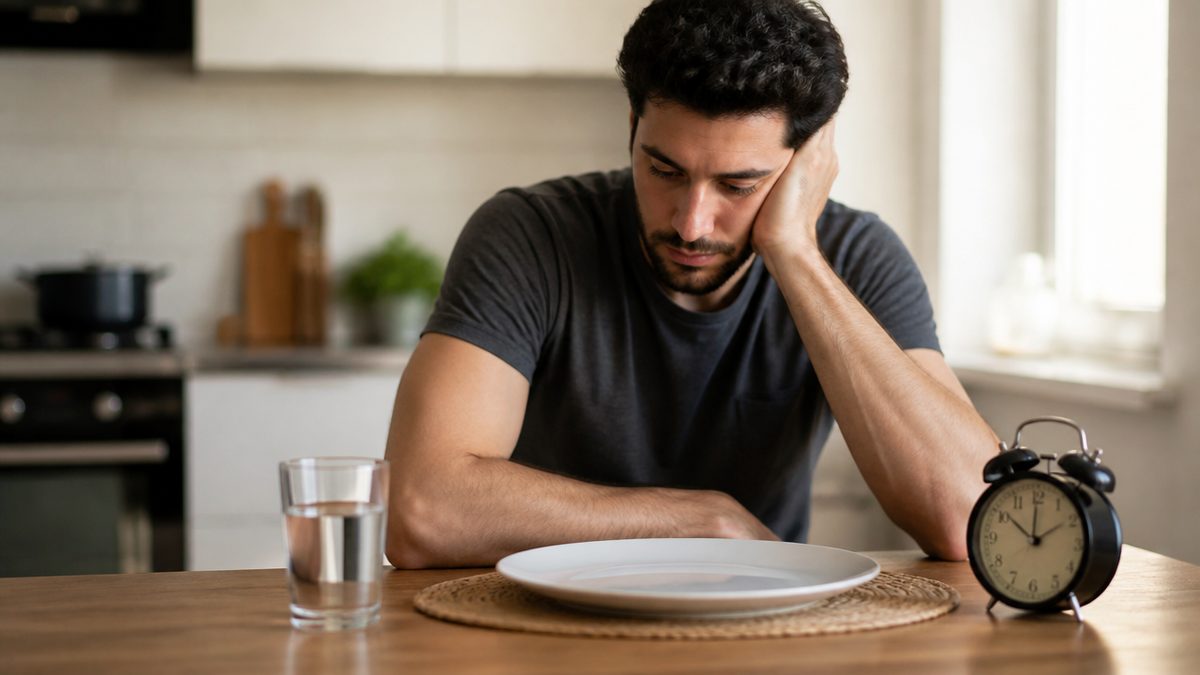
Does fasting help male fertility?
Read article →