Does Losing Weight Increase HDL? What the Research Actually Shows

Yes, losing weight raises HDL cholesterol. Every kilogram you lose and keep off adds roughly 0.35 mg/dL to your HDL. A sustained 10 kg loss typically pushes HDL up by 3 to 4 mg/dL.
But here's the catch: timing. HDL often dips while you're actively dieting, then climbs back once your weight stabilises, usually within 3 to 6 months. So if you're mid-diet and your HDL looks worse, that's not failure. That's normal physiology doing its thing.
Why Does HDL Drop While You Are Losing Weight?
Most articles skip this part. And it confuses a lot of people. rapid weight loss
When you cut calories, your body breaks down stored fat for fuel. As fat cells release fatty acids into your bloodstream, your liver adjusts how it processes lipoproteins. During this active breakdown phase, HDL particles are consumed faster than they're made. The result is a temporary dip in HDL levels.
One of my clients came in frustrated after eight weeks of clean eating and consistent exercise. Her HDL had dropped from 1.2 mmol/L to 1.0 mmol/L. She'd lost 6 kg. She thought she was doing something wrong. She wasn't. Her body was still in the fat-burning phase. Three months after her weight stabilised, her HDL sat at 1.35 mmol/L, higher than when she started.
A 1992 meta-analysis of 70 studies confirmed this pattern. HDL fell by 0.007 mmol/L during active weight loss, then rose significantly once weight was maintained. A 2021 review replicated the same finding, calling it a consistent, time-dependent response.
Your body isn't broken. It's adjusting. Give it time to stabilise before you judge the result.
Why Is My Cholesterol High If I Am Losing Weight?
Weight loss doesn't automatically improve every cholesterol marker at once. In fact, total cholesterol and LDL can both rise temporarily during active fat loss for the same reason HDL dips. Stored cholesterol gets released as fat cells shrink. It has to go somewhere, and for a period, it circulates in your blood.
This is called transient hypercholesterolaemia during weight loss. It's documented, it's temporary, and it resolves once fat mass stabilises.
There's also a separate issue worth knowing. If your diet during weight loss is high in saturated fat, even in a calorie deficit, LDL and total cholesterol can stay elevated or worsen. The calorie deficit alone doesn't override the quality of what you eat. What works best is a calorie deficit combined with higher fibre intake and lower saturated fat. That combination tends to move all the cholesterol markers in the right direction once weight stabilises.
If your cholesterol is still elevated after 6 months of stable weight loss, that's the point to talk with your doctor. Some people have genetic cholesterol conditions that weight loss alone won't fix.
What Impacts HDL the Most?
Weight loss is one lever. It's not the only one.
Regular aerobic exercise is arguably the most reliable HDL booster. Studies consistently show that sustained moderate-intensity cardio raises HDL independent of weight loss. When you combine exercise with sustained weight reduction, the effect compounds.
Smoking lowers HDL. Quitting raises it, often significantly within weeks.
Alcohol has a complicated relationship with HDL. Moderate consumption is associated with slightly higher HDL in population studies, but that's not a reason to start drinking. The cardiovascular risks of alcohol outweigh any HDL benefit for most people.
Trans fats crush HDL. Refined carbohydrates and added sugars push triglycerides up and HDL down. Both remain common even among people who think they eat reasonably well.
Genetics set the ceiling and the floor. Some people have naturally high HDL regardless of lifestyle. Others carry genetic variants that keep HDL low even with optimal diet and exercise. That's not a reason to give up. It's a reason to understand what you're working with and set realistic expectations.
Is High HDL Caused by Diet?
Diet influences HDL, but it's rarely the primary driver of high HDL. Genetics play a bigger role at the high end.
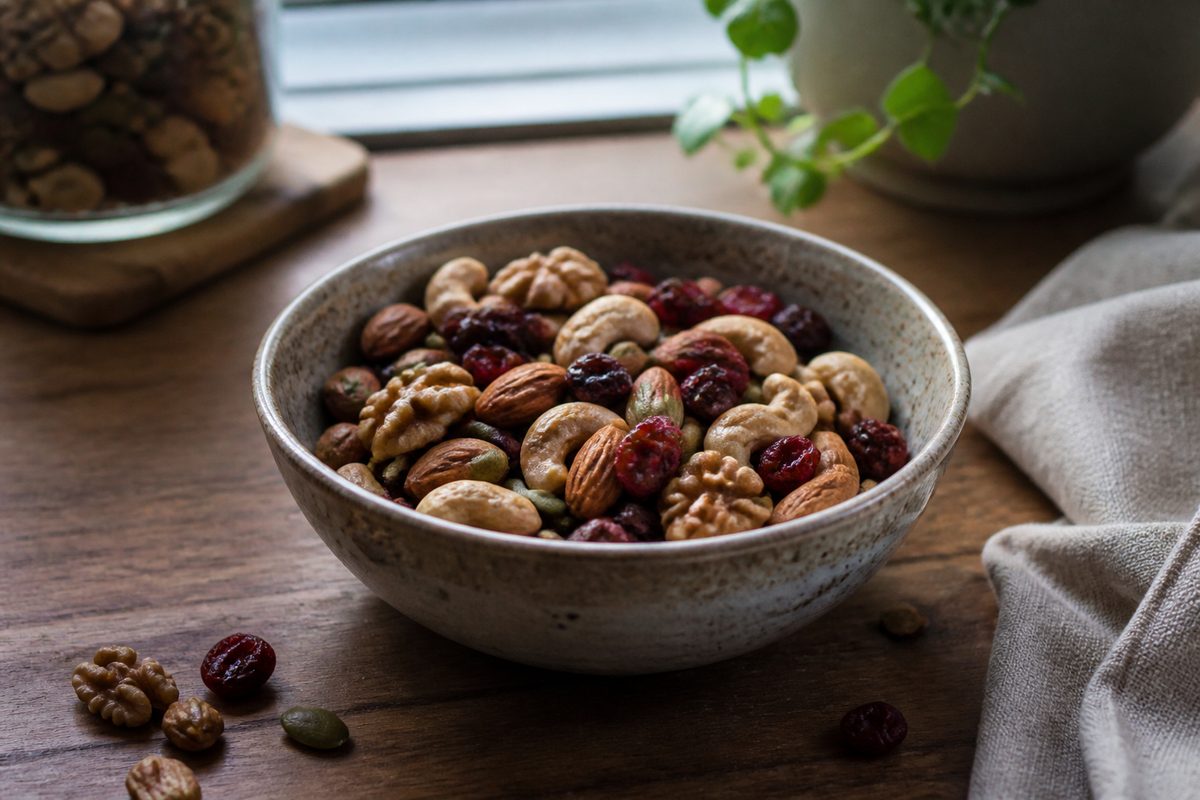
Specific dietary patterns do raise HDL meaningfully. The Mediterranean diet, high in olive oil, oily fish, nuts and vegetables, consistently shows HDL-raising effects in clinical trials. It's not any single food. It's the overall pattern.
Replacing refined carbohydrates with healthy fats tends to raise HDL more than simply cutting fat. This is one reason very low-fat diets sometimes produce disappointing cholesterol results. Fat isn't the enemy of HDL. The type of fat and the quality of carbohydrates matter far more than total fat intake.
What diet alone rarely does is push HDL to very high levels. If someone's HDL is above 2.0 mmol/L, that's usually genetic. Diet can support and maintain it, but it didn't create it.
Why Did My HDL Cholesterol Go Down?
There are several reasons HDL drops, and not all are diet or weight related.
Active weight loss, as covered above, temporarily lowers HDL while fat is being mobilised. This resolves with weight stabilisation.
Starting a very low-fat diet can lower HDL because dietary fat, particularly monounsaturated and polyunsaturated fat, supports HDL production. People who switch to extremely low-fat eating sometimes see HDL fall even as they lose weight.
Inactivity is a common culprit. If exercise drops off, HDL tends to follow. This happens a lot when people focus entirely on diet and cut out the gym.
Certain medications lower HDL, including some blood pressure drugs and anabolic steroids. If HDL dropped after a medication change, that's worth discussing with your prescribing doctor.
Chronic stress and poor sleep both suppress HDL over time through inflammatory pathways. I know this sounds like standard wellness talk, but when I have clients doing everything right on paper and HDL still won't move, sleep and stress are almost always part of the story.
One of my clients had been exercising consistently, eating well, and lost 8 kg over 4 months. Her HDL was unchanged. When we looked closer, she was sleeping 5 hours a night and working under significant pressure. Once sleep improved to 7 hours, HDL climbed 0.2 mmol/L over the next two months without any other changes.
How Much Weight Loss Do You Actually Need?
The threshold that consistently shows HDL improvement in research is 5 to 10% of body weight, sustained over time. For a 90 kg person, that's 4.5 to 9 kg kept off, not just lost temporarily.
Bigger losses produce bigger gains. In the SURMOUNT-1 trial, adults with obesity who lost 35% or more of their body weight over 72 weeks showed significant cardiometabolic improvements across multiple markers, including HDL. That's an extreme example, but it confirms the dose-response relationship. More sustained loss means more HDL benefit.
The word sustained matters more than the number. Weight lost and regained brings HDL back down. The gain is tied to the maintenance, not the loss itself. This is why rapid weight loss programs that end in weight regain do little for long-term HDL or cardiovascular health.
Three Things Most Articles Get Wrong About HDL and Weight Loss
1. Losing weight is not the same as improving HDL. The two are related but not identical. The timing gap between weight loss and HDL improvement catches people off guard. If you test HDL mid-diet, you may see a number that looks like failure when you're actually on track. Test after weight has been stable for at least 3 months.
2. HDL doesn't act alone. People fixate on raising HDL as if that single number determines cardiovascular risk. What matters more is the ratio of total cholesterol to HDL, triglycerides, and LDL particle size. A person with HDL of 1.4 mmol/L and low triglycerides is in a very different position than someone with the same HDL but triglycerides of 3.0 mmol/L. Sustained weight loss tends to improve all of these together, which is why the overall cardiometabolic picture improves more than any single number suggests.
3. Very high HDL is not always better. There's a point at which very high HDL stops being protective. Some research suggests HDL above 2.5 mmol/L may carry its own risks. This is still debated, but it challenges the idea that HDL is a number you simply want as high as possible. The goal is a healthy range, not the highest possible value.
What to Do If HDL Is Still Low After Significant Weight Loss
If you've lost 10% or more of your body weight, kept it off for at least 6 months, exercise regularly, don't smoke, and HDL is still below 1.0 mmol/L for men or 1.2 mmol/L for women, that warrants medical review.
At that point, lifestyle changes have done what they can do. The options from there include looking at medications, investigating secondary causes like thyroid function or insulin resistance, and considering whether a genetic lipid disorder is part of the picture.
This isn't a situation to manage with more of the same approach. It needs a clinical conversation with someone who can look at the full picture, including apolipoprotein levels, lipid particle size, and family history.
Frequently Asked Questions
How long does it take for weight loss to raise HDL?
Expect 3 to 6 months after weight stabilises. HDL tends to dip during active weight loss, then rises once your body adjusts to the new stable weight. Testing too early gives a misleading result.
Can you raise HDL without losing weight?
Yes. Regular aerobic exercise raises HDL independently of weight loss. Quitting smoking raises HDL. Improving diet quality, particularly by replacing refined carbohydrates with unsaturated fats, raises HDL. Weight loss amplifies these effects but isn't the only path.
Does a low-carb diet raise HDL?
It often does. Low-carb diets consistently show HDL improvements in clinical studies, partly because they reduce triglycerides and replace refined carbs with fat. The effect is more reliable when the fats are unsaturated rather than primarily saturated.
What is a good HDL level?
For cardiovascular protection, 1.0 mmol/L or above for men and 1.2 mmol/L or above for women is the standard clinical benchmark. Above 1.5 mmol/L is generally considered protective. Below 1.0 mmol/L for either sex signals increased cardiovascular risk.
Does HDL go back down if you regain the weight?
Yes. The HDL gain from weight loss is directly tied to keeping the weight off. Weight regain reverses the improvement. This is one of the strongest arguments for sustainable lifestyle change over repeated cycles of losing and regaining.
Is exercise or weight loss better for HDL?
Both work. Exercise raises HDL through mechanisms separate from weight loss, including changes in the enzymes that process HDL particles. Combining sustained weight loss with regular aerobic exercise produces better results than either alone.
What to Do Now
If your goal is to raise HDL through weight loss, here's what the evidence points to:
- Aim for 5 to 10% sustained weight loss as a minimum target. More helps more.
- Don't test HDL mid-diet. Wait until weight has been stable for at least 3 months.
- Add regular aerobic exercise. Even 30 minutes of brisk walking most days moves the needle.
- Reduce refined carbohydrates and replace them with unsaturated fats and fibre.
- If HDL remains low after significant, stable weight loss, get a full lipid panel reviewed by a doctor rather than adjusting diet further on your own.
The single most actionable thing you can do today is commit to weight maintenance once you hit your target. The loss gets you there. Keeping it off is what changes your HDL.Sources

What snack is filling but not fattening?
Read article →
What can I eat that will fill me up but is healthy?
Read article →
How to reduce MS symptoms?
Read article →
Can fasting help autoimmune disorders?
Read article →
Does fasting help male fertility?
Read article →