How to Reduce Cortisol in 7 Days: What Actually Works

Yes, you can measurably lower cortisol in seven days. The research is clear on this. Daily hard exercise plus 20 minutes of meditation each morning is your fastest path.
Seven sessions of mindfulness changed cortisol stress response in young men. One 30-minute workout at 70% of your max heart rate buffered cortisol for hours afterward.
Combine both, nail your sleep, and cut caffeine after noon. By day seven, most people feel the difference.
What Is Cortisol and Why Does It Spike?
Cortisol is a hormone made by your adrenal glands. It sits at the end of a chain reaction called the HPA axis: hypothalamus signals the pituitary, pituitary signals the adrenals, adrenals release cortisol. This is your body's stress response system, and it works fast.
In the short term, cortisol is useful. It sharpens focus, mobilizes energy, and gets you ready to act. The problem starts when it stays elevated.
Chronic stress, poor sleep, too much caffeine, and skipping exercise all keep cortisol high when it should be coming down. Your cortisol naturally peaks about 30 minutes after waking. This is called the cortisol awakening response.
It should drop steadily through the day and be low at night. When that rhythm breaks, everything breaks with it: sleep, mood, metabolism, immune function.
What Are the Warning Signs of High Cortisol?
Most people dismiss these as just being stressed. They're also signs your cortisol is running too high for too long.
- You wake up tired even after a full night's sleep
- You carry fat around your belly and nowhere else
- You feel wired at night but exhausted during the day
- Your mood swings without obvious reason
- You get sick often and stay sick longer than you should
- Your blood pressure has crept up
- You crave sugar and salty food constantly
- Your memory and concentration feel foggy
- Your libido has dropped
- Muscle weakness or slow recovery after exercise
One of my clients came in reporting all of these. She assumed it was thyroid. When we ran a salivary cortisol panel (morning, midday, and evening), her morning reading was sky-high and her evening reading barely dropped.
Her cortisol rhythm was essentially flat all day. That pattern is what chronic stress does over months.
What Lowers Cortisol Immediately?
Three things work fast. Within minutes to hours.
Hard exercise. This sounds counterintuitive because exercise temporarily raises cortisol while you train. But the payoff comes after.
One 30-minute session at 70% of your max heart rate produced a lower total cortisol output and faster recovery when people were stressed afterward. The harder the session, the better the buffer.
In my experience, a 30-minute run or a solid weights session reliably takes the edge off within an hour of finishing.
Slow breathing. Your nervous system has a fast lane to calm. Extending your exhale, breathing in for four counts and out for six or eight, activates the vagus nerve and dials down the HPA axis response almost immediately.
This isn't a long-term fix on its own, but when a stressful moment hits, it's the fastest tool you have.
Cold water. A cold shower or even splashing cold water on your face triggers a dive reflex that slows your heart rate and shifts your nervous system toward parasympathetic mode.
I've used this personally on high-stress days and the effect on alertness and calm is immediate. The cortisol data on cold exposure is mixed, but the nervous system response is real.
The 7-Day Plan That Actually Moves the Numbers
Cortisol changes on two timescales. Acute effects from exercise and breathing happen within hours. Baseline changes, the ones that actually shift your daily rhythm, take consistent daily input over several days.
Seven days is enough to see both.
Here's what to stack.
Day 1 to 7: Daily Exercise at Real Intensity
Thirty minutes. Minimum 70% of your max heart rate. That's roughly the point where talking becomes difficult.
Walking doesn't get you there. A brisk run, a bike ride that makes you breathe hard, a circuit training session. These do.
Active people show measurably different cortisol responses to stress compared to sedentary people. The adaptation builds over days. By the end of the week you're not just buffering cortisol acutely, you're changing how your nervous system responds to stress at a baseline level.
When I switched from casual walking to 30-minute runs five days a week, the first thing I noticed by day four was that I stopped feeling that afternoon cortisol crash. The second thing was better sleep.
Day 1 to 7: 20 Minutes of Meditation Each Morning
Seven sessions of 20-minute mindfulness meditation changed salivary cortisol response to acute stress in young men. That's 140 minutes across a week, less than most people spend scrolling before bed.
The mechanism isn't mysterious. Meditation trains your prefrontal cortex to regulate your amygdala. Your amygdala is the alarm system that triggers the HPA axis.
Train the brake, get better at stopping the cortisol spiral before it starts.
You don't need an app. Sit, close your eyes, breathe slowly. When your mind wanders, bring it back. That's the whole practice.
Twenty minutes first thing in the morning before you check your phone works best because you're catching your nervous system before it gets activated by the day.
Every Day: Sleep Seven to Eight Hours at the Same Time
Sleep deprivation is one of the most reliable ways to destroy your cortisol rhythm. One bad night raises evening cortisol.
A week of poor sleep shifts your entire HPA axis response. Consistent bedtime matters more than most people think.
Your cortisol awakening response is partly timed by your circadian clock. If your sleep timing shifts night to night, your cortisol never finds its rhythm.
Pick a bedtime and keep it, even on weekends. One of my clients was doing everything right with exercise and diet but her cortisol panel stayed elevated at night.
We tracked her sleep timing and found she was going to bed anywhere from 10pm to 1am depending on the day. We fixed the bedtime first. Her evening cortisol dropped within two weeks.
Cut Caffeine After Noon
Caffeine stimulates the adrenal glands directly. It raises cortisol.
A morning coffee is fine for most people. Cortisol is already elevated in the first 30 minutes after waking and caffeine doesn't add much to the peak.
Afternoon and evening caffeine is different. It extends cortisol elevation into the hours when it should be falling. It also cuts into sleep quality, which compounds the problem overnight.
If you're a heavy coffee drinker, drop to one or two cups before noon for the seven days. The withdrawal headache on day two is worth it.
Spend 20 to 30 Minutes Outside in Green Space Daily
Nature exposure influences cortisol, though the research shows highly variable results depending on the study design. What's consistent is that time outdoors in green space, parks, or trees reduces self-reported stress and shows some cortisol reduction across studies.
The practical advice is to combine this with your exercise. Run or walk outside in a park rather than on a treadmill. You stack the exercise benefit and the nature benefit in the same 30 minutes.
What to Eat First Thing in the Morning to Reduce Cortisol?
Protein and fat first, carbohydrates second. Your cortisol is already spiking in the morning as part of your awakening response.
A high-sugar breakfast amplifies the cortisol and insulin response and sets you up for a blood sugar crash by mid-morning. That triggers another cortisol release.
A breakfast built around eggs, Greek yogurt, or smoked salmon with some avocado stabilizes blood glucose and supports cortisol clearance. If you do want carbohydrates, pair them with protein and eat them after the protein, not before.
Phosphatidylserine, found in eggs and organ meats, is one of the more studied nutritional compounds for blunting cortisol response. It's also available as a supplement if your diet is limited.
What to Drink to Lower Cortisol?
Water first. Dehydration is a physiological stressor and raises cortisol. Most people are mildly dehydrated by the time they feel thirsty.
Drink water before coffee every morning. Ashwagandha tea or supplements have the strongest nutritional evidence for cortisol reduction.
Multiple randomized controlled trials show meaningful reductions in cortisol and self-reported stress with daily ashwagandha use over four to eight weeks. Seven days is on the short end, but some people notice an effect within the first week.
Green tea contains L-theanine, which blunts the cortisol-raising effect of caffeine. Swapping afternoon coffee for green tea gives you some caffeine with a built-in cortisol moderator.
Alcohol is worth mentioning here because many people use it to wind down. It raises cortisol, disrupts sleep architecture, and makes the next day's stress response worse.
If lowering cortisol is the goal, alcohol during the seven days works against you.
The Part Most Articles Get Wrong
Most cortisol articles focus on relaxation, baths, candles, breathing exercises. These help acutely. They don't build stress resilience.
The research tells a different story. Hard exercise is one of the most powerful cortisol regulators available.
It temporarily raises cortisol during the session and then produces a lower, faster cortisol response to stress for hours afterward. People who exercise regularly have fundamentally different HPA axis function than people who don't.
The counterintuitive truth is that the path to lower cortisol runs through controlled stress, hard workouts, cold exposure, brief discomfort. You're not trying to eliminate the stress response.
You're training it to be proportionate and fast to recover. That's a completely different target than just trying to feel calm.
I know this because my client spent six months doing yoga and taking magnesium while her cortisol panel stayed elevated. We added three hard cardio sessions per week and her evening cortisol dropped significantly within the first month.
The yoga didn't change the baseline. The hard exercise did.
How to Know It Is Working
Subjectively, most people notice better sleep, less afternoon energy crashes, and a calmer baseline response to stressful moments by day five or six.
Objectively, heart rate variability (HRV) tracked by most modern fitness watches reflects autonomic nervous system recovery. Rising HRV across the week is a proxy for improved stress regulation.
Salivary cortisol test kits, available online and at functional medicine practices, let you measure morning, midday, and evening cortisol directly. A good result is a high morning reading that drops steadily through the day and is low by 10pm.
FAQ
Can you really lower cortisol in seven days?
Yes. Seven sessions of daily meditation changed cortisol stress response within a week. Exercise changes cortisol acutely after a single session.
The combination of both, with consistent sleep and reduced caffeine, produces measurable shifts inside seven days for most people.
What is the fastest way to lower cortisol right now?
A 30-minute hard workout or extended exhale breathing (4 counts in, 6 to 8 counts out) both work within the hour. Exercise is more powerful and the effect lasts longer.
Do supplements lower cortisol?
Ashwagandha has the strongest evidence. Phosphatidylserine and L-theanine have supporting evidence. Magnesium glycinate supports sleep quality which indirectly supports cortisol regulation.
None of these replace exercise and sleep.
Does cortisol go up with exercise?
Yes, during the session. But post-exercise, cortisol falls below baseline and your stress response to challenges later that day is measurably blunted.
The temporary rise is worth the lasting buffer.
What makes cortisol worse?
Sleep deprivation, afternoon caffeine, alcohol, chronic psychological stress without recovery, and a sedentary lifestyle. Skipping meals and blood sugar swings also trigger cortisol release.
What to Do Starting Tomorrow
Pick a bedtime tonight and keep it for seven days. Tomorrow morning, before you check your phone, sit for 20 minutes and breathe.
Then exercise, hard, for 30 minutes. Eat protein first. Drink water before coffee. Cut caffeine after noon. Repeat for seven days.
That's the plan. It's not complicated. The only thing that makes it hard is doing it consistently.
By day seven, your nervous system will be in a different place than it is today.
Sources

What snack is filling but not fattening?
Read article →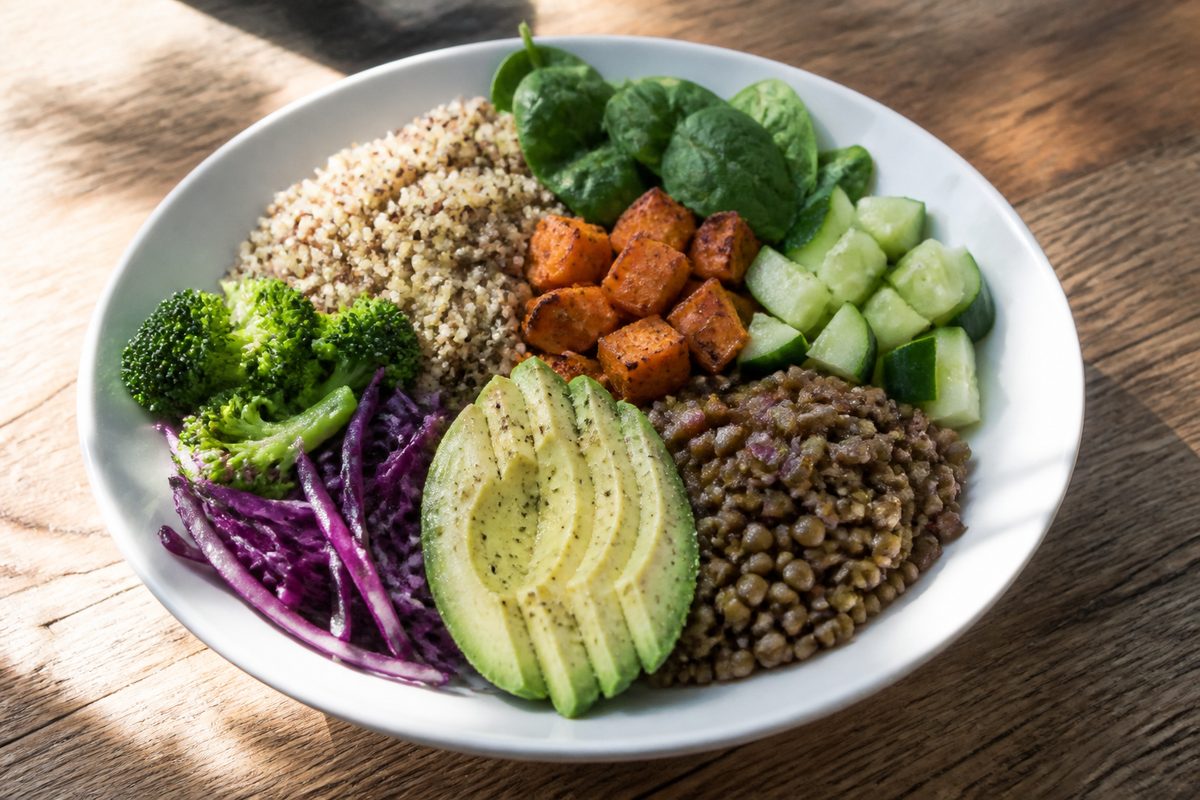
What can I eat that will fill me up but is healthy?
Read article →
How to reduce MS symptoms?
Read article →
Can fasting help autoimmune disorders?
Read article →
Does fasting help male fertility?
Read article →