Is It Better to Fast for 12 or 16 Hours? A Direct Comparison
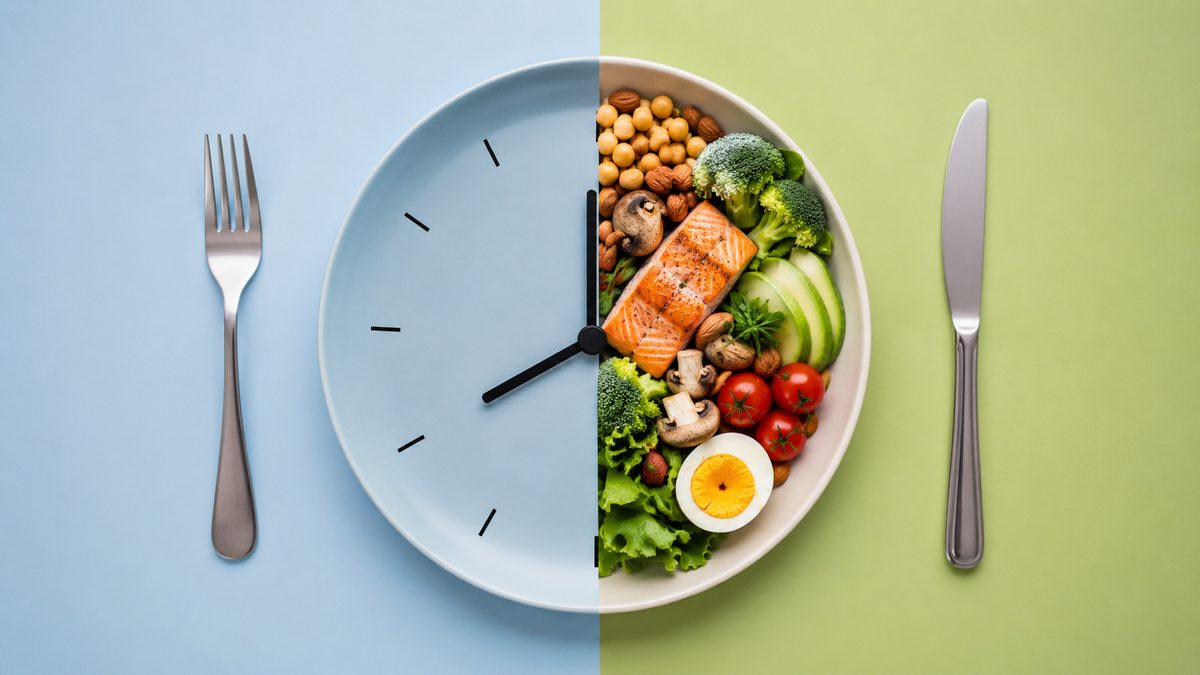
Sixteen hours wins for fat loss and autophagy. Twelve hours wins for consistency and long-term adherence. Which one is actually better depends on where you are right now, not where you want to be.
Most articles on this topic treat fasting duration like a competition. In my experience, that framing causes people to jump straight to 16:8, burn out in two weeks, and quit entirely. The smarter question is which protocol you will actually stick to for six months or more.
What Is the Difference Between 12-Hour and 16-Hour Fasting?
A 12-hour fast means you eat within a 12-hour window and fast for the remaining 12. Finish dinner at 8pm, eat breakfast at 8am. Most people already do something close to this without thinking of it as fasting.
A 16-hour fast compresses your eating window to 8 hours. Finish dinner at 8pm, skip breakfast, eat your first meal at noon. This is the 16:8 protocol. It's the most researched form of intermittent fasting in the scientific literature.
The core biological difference comes down to glycogen depletion. Your liver stores roughly 100 grams of glycogen. After a meal, your body burns through that reserve over 10 to 14 hours depending on your activity level and metabolic rate. Once glycogen runs low, your body shifts toward fat oxidation. A 12-hour fast gets you to the edge of that shift. A 16-hour fast pushes you well past it.
Research published in Cell Metabolism found that time-restricted eating in an 8-hour window improved metabolic markers in men with metabolic syndrome even without calorie restriction [1]. The extended fasting period, not just the calorie reduction, drove the improvement.
Is a 12-Hour Fast Enough to Lose Weight?
Yes. But the mechanism is mostly indirect. A 12-hour fast reduces weight primarily by cutting late-night eating and creating a modest calorie deficit. It doesn't reliably push your body into significant fat oxidation on its own.
A 2019 study in Obesity found that participants who restricted eating to a 10-hour window lost an average of 3.5kg over 12 weeks without counting calories [2]. A 12-hour window produces smaller effects because the metabolic shift into fat burning is shorter and less pronounced.
What I found when working with people new to fasting is that 12 hours works well as a starting point because it changes behavior without requiring much sacrifice. You stop eating after dinner and you don't eat until morning. That single habit eliminates most mindless snacking, which is where a large portion of excess calories come from for most people.
If your goal is weight loss and you're currently eating across 14 to 16 hours a day, moving to a 12-hour window will produce results. If you're already eating within a 12-hour window and not losing weight, extending to 16 hours is the logical next step.
Who Should Choose a 12-Hour Fast Over a 16-Hour Fast?
Twelve hours is the right starting point for most people who've never fasted before, anyone with a history of disordered eating, people with high physical output early in the morning, and women who are pregnant or breastfeeding.
There's a specific group that gets overlooked in most fasting content: women in perimenopause and menopause. Some research suggests aggressive calorie restriction and extended fasting can elevate cortisol in women with already disrupted hormonal profiles, which can worsen sleep and increase fat storage around the abdomen [3]. A 12-hour window avoids that stress response while still providing metabolic benefit.
Athletes training twice a day or doing high-intensity work before noon are also better served by a 12-hour protocol. Fasted high-intensity training isn't inherently dangerous, but performance drops and recovery slows when glycogen is depleted before a hard session. If your training matters to you, protect your fueling window.
People with type 1 diabetes or those on insulin or sulfonylureas should not extend fasting duration without medical supervision. The risk of hypoglycemia increases with longer fasting periods. This is a genuine safety concern, not a theoretical one.
Does a 16-Hour Fast Trigger Autophagy More Than a 12-Hour Fast?
Yes. Autophagy, the process by which your cells break down and recycle damaged components, ramps up meaningfully after the 14 to 16 hour mark in most people.
The research here is more nuanced than most fasting content admits. Yoshinori Ohsumi won the 2016 Nobel Prize in Physiology for his work on autophagy, and that discovery sparked a wave of fasting-related claims that outpaced the actual evidence [4]. What we know is that autophagy increases during fasting and that the signal to upregulate it is tied to low insulin and low mTOR activity, both of which occur more reliably after 16 hours than after 12.
What we don't know with precision is the exact threshold for meaningful autophagy in humans, because most of the mechanistic research was done in yeast and mice. Human studies show autophagy markers rising after extended fasting, but the clinical significance of those markers for healthy adults is still being worked out.
The practical takeaway: if autophagy is your primary goal, 16 hours is the better protocol. If your goal is weight management and metabolic health, the difference between 12 and 16 hours matters less than consistency over time.
Are There Any Risks to Fasting for 16 Hours Instead of 12 Hours?
For most healthy adults, a 16-hour fast carries low risk. The risks that do exist are specific and worth knowing.
Muscle loss is the concern most people raise first. It's largely overstated for short fasting windows. Research from the American Journal of Clinical Nutrition found that muscle protein synthesis is not significantly impaired during a 16-hour fast in people who eat adequate protein within their eating window [5]. The key phrase is adequate protein. If you're eating 60 grams of protein a day and fasting 16 hours, you will lose muscle. If you're eating 1.6 to 2.2 grams per kilogram of bodyweight, you won't.
Cortisol elevation is a real risk for people under chronic stress. Fasting is a physiological stressor. Stack it on top of poor sleep, high work stress, and under-eating and you create a cortisol load that can impair thyroid function and increase fat storage. When I tried extending my fast during a particularly high-stress period, my sleep quality dropped noticeably within two weeks. Pulling back to 13 to 14 hours fixed it.
Disordered eating patterns can be triggered or reinforced by extended fasting in people with a history of restriction. The structure of fasting can feel like permission to restrict, and for some people that line blurs quickly. If you've ever had a complicated relationship with food, work with a clinician before extending your fasting window.
Gallstone risk increases with prolonged fasting over many months, particularly in people who are overweight. Bile becomes more concentrated when the gallbladder isn't regularly stimulated by fat intake [6]. This is more relevant for very long fasts (24 hours or more) but worth noting for anyone with a family history of gallstones.
Which Fasting Duration Is Better for Long-Term Sustainability?
Twelve hours is more sustainable for most people because it requires almost no behavioral change from a normal eating pattern. Sixteen hours requires skipping breakfast, which conflicts with social norms, family routines, and early morning hunger for a significant portion of the population.
A 2020 study in JAMA Internal Medicine compared 16:8 fasting to unrestricted eating over 12 months and found no significant difference in weight loss between groups [7]. The researchers noted that adherence in the fasting group dropped substantially after the first three months. This is the finding most fasting advocates skip over.
The question of whether it's better to fast for 12 or 16 hours comes back to what you will do consistently for a year, not what produces the best results in a six-week trial. A 12-hour fast done every day beats a 16-hour fast done four days a week.
What works in practice is a graduated approach. Start at 12 hours for four to six weeks. If it feels easy and you want more, move to 14 hours. If that still feels manageable after another month, try 16. If 16 hours makes you irritable, disrupts your sleep, or causes you to overeat in your window, pull back to 14. Your sustainable threshold is the right answer. It's different for everyone.
How to Choose the Right Fasting Window for Your Goals
Match your fasting duration to your current starting point and your primary goal.
- New to fasting or coming from a 14 to 16 hour eating window: start at 12 hours.
- Already eating within 12 hours and want to accelerate fat loss: move to 14 to 16 hours.
- Primary goal is autophagy and cellular health: aim for 16 hours consistently.
- High training volume or early morning workouts: stay at 12 to 13 hours and protect your pre-training fuel.
- Significant stress, poor sleep, or hormonal disruption: do not extend past 12 to 13 hours until those factors are addressed.
One thing most articles miss is that the quality of your eating window matters as much as its length. A 16-hour fast followed by 8 hours of processed food and low protein will produce worse outcomes than a 12-hour fast with a nutrient-dense, high-protein eating window. Fasting duration is one variable in a larger system.
FAQ
Can I drink coffee or water during my fasting window?
Water, black coffee, and plain tea don't break a fast in any meaningful metabolic sense. They don't raise insulin or interrupt fat oxidation. Adding milk, cream, or sweeteners does break the fast.
Will I lose muscle if I fast for 16 hours?
Not if your protein intake is adequate. Aim for at least 1.6 grams of protein per kilogram of bodyweight within your eating window and resistance training will preserve muscle mass during a 16-hour fast.
Is 12-hour fasting the same as just not eating overnight?
Essentially yes. If you finish dinner at 7pm and eat breakfast at 7am, you've completed a 12-hour fast. The difference is intentionality. Treating it as a deliberate practice tends to reduce late-night eating more reliably than just going to bed.
How long before I see results from intermittent fasting?
Most people notice changes in energy and appetite within one to two weeks. Measurable weight changes typically appear within four to six weeks, assuming the eating window isn't compensating with excess calories.
Should I fast every day or take days off?
Daily fasting produces more consistent metabolic adaptation than intermittent fasting days. That said, flexibility on social occasions or high-training days doesn't meaningfully undermine results. Rigidity that causes stress is counterproductive.
Does fasting affect women differently than men?
Some research suggests women are more sensitive to caloric restriction signals, with potential effects on luteinizing hormone and reproductive function at aggressive deficits [8]. A 12 to 14 hour window appears to carry lower hormonal risk than 16 to 20 hours for premenopausal women, though individual responses vary.
The One Thing to Do Next
Pick a fasting window you can hit seven days a week without stress. Start there for four weeks before deciding whether to extend it. Consistency at 12 hours will outperform inconsistency at 16 every time.

What snack is filling but not fattening?
Read article →
What can I eat that will fill me up but is healthy?
Read article →
How to reduce MS symptoms?
Read article →
Can fasting help autoimmune disorders?
Read article →
Does fasting help male fertility?
Read article →