What Happens If You Don't Eat Enough While on Tirzepatide

If you don't eat enough while on tirzepatide, you risk losing muscle mass, developing nutrient deficiencies, and in serious cases, triggering a dangerous metabolic condition called euglycemic ketoacidosis. The drug suppresses appetite so effectively that many people drop well below the calories their body needs.
The damage is real. Eat a minimum of 1,200 to 1,500 calories per day if you're a woman, or 1,500 to 1,800 if you're a man, even when you feel no hunger at all.
This is the part most people miss. Tirzepatide works. The appetite suppression is powerful. But that power is exactly why what you have to eat deliberately, not by how you feel.
Why Tirzepatide Kills Your Appetite So Hard
Tirzepatide activates two hormonal receptors at once: GLP-1 (glucagon-like peptide-1) and GIP. Together, they slow how fast your stomach empties, signal your brain that you're full, and reduce food cravings. The result is dramatic.
A randomized trial of 114 adults with overweight or obesity found that tirzepatide reduced how much people ate at a meal by 525 calories compared to placebo, with significant drops in hunger, cravings, and the urge to overeat. That's over a quarter of most people's daily intake gone in a single meal observation.
When clients report their first few weeks on tirzepatide, a common pattern shows up: they feel genuinely full after a few bites, skip meals without noticing, and then wonder why they feel exhausted and foggy by week six. The appetite suppression feels like progress. It isn't always.
What Actually Happens to Your Body When You Undereat on Tirzepatide
You Lose Muscle, Not Just Fat
This is the outcome that matters most, and most articles skip it.
A 2025 review of clinical trial data found that people using incretin-mimetic drugs including tirzepatide lost 10% or more of their muscle mass over 68 to 72 weeks. That's roughly equivalent to 20 years of age-related muscle decline, compressed into about 16 months.
Muscle is not just cosmetic. It drives your metabolism, supports your joints, regulates blood sugar, and determines how functional you are as you age. Losing it quickly while eating too little accelerates every one of those problems.
The review is direct: inadequate protein intake when appetite is suppressed makes these losses worse, and the downstream effects include reduced metabolic health, weight cycling after stopping the drug, and lower quality of life.
One of my clients came to me after eight weeks on tirzepatide. She had lost weight fast, felt proud of the number on the scale, but was exhausted, cold all the time, and her hair was coming out in clumps. Her food diary showed she was averaging under 800 calories a day. She wasn't trying to restrict. She just wasn't hungry. By the time she got support, she had lost significant lean mass that took months to rebuild.
Nutrient Deficiencies Set In Faster Than You Think
When total food intake drops that low, micronutrients collapse with it. Iron, B12, zinc, magnesium, and vitamin D are the first to fall short. These deficiencies explain the fatigue, hair loss, poor concentration, and cold intolerance that show up in people who are technically losing weight but feeling terrible.
Calorie restriction alone does not cause all of this. Calorie restriction combined with poor food quality does. If the 800 calories someone eats are crackers and coffee, the nutritional damage is severe. If they're lean protein, vegetables, and whole foods, the damage is less, but the risk is still real.
Skipping Meals Makes This Worse
Skipping meals on tirzepatide is common because the hunger signals that normally remind you to eat are blunted. Many people go half a day without eating and don't register it. But the body still needs fuel. When it doesn't get it, it pulls from wherever it can, including muscle tissue.
Spreading protein across two to three meals matters here. Your body can only use so much protein at once for muscle synthesis. Eating 80 grams of protein in one sitting is far less effective than spreading it across the day. Skipping meals makes that distribution impossible.
The Dangerous Edge Case: Euglycemic Ketoacidosis
This is the risk most people have never heard of, and it's serious enough to warrant its own section.
A case report published in 2026 describes a 30-year-old man with no history of diabetes who developed euglycemic diabetic ketoacidosis (EDKA) while using tirzepatide alongside intermittent fasting and a low-carbohydrate diet. What makes EDKA dangerous is that blood sugar stays normal, so standard warning signs don't appear. By the time symptoms show, the metabolic crisis is already underway.
The authors of that case report are clear: combining GLP-1/GIP receptor agonists like tirzepatide with ketosis-inducing dietary patterns without medical supervision is a genuine risk. This means very low carbohydrate diets (under 50 grams per day), extended fasting protocols, and extreme calorie restriction below 1,000 calories per day should not be combined with tirzepatide without a doctor actively monitoring you.
This is not a theoretical risk buried in fine print. It happened to a healthy young man, and it can happen to others.
Will You Lose Weight If You're Not Eating Enough?
Short term, yes. But it's the wrong kind of weight loss.
When you drop calories too low, your body does lose weight, but the composition shifts toward muscle and water rather than fat. Your metabolism slows to compensate. When you eventually stop the medication or increase calories, the weight returns faster because you've lost the metabolically active tissue that burns energy at rest.
This is the weight cycling pattern the 2025 muscle loss review warns about directly. The number on the scale goes down. The outcomes don't match it.
Real fat loss on tirzepatide comes from a moderate deficit, not an extreme one. The drug already creates that deficit by reducing your appetite. You don't need to add aggressive restriction on top of it.
Should You Force Yourself to Eat on Tirzepatide?
Yes, but "force" is the wrong frame. The better word is intention.
Hunger is no longer a reliable guide when you're on tirzepatide. You need to eat by schedule and by target, not by feeling. Set meal times. Hit your protein numbers. Use calorie-dense, nutrient-rich foods when appetite is low: Greek yogurt, eggs, nut butters, protein shakes, avocado, and oily fish. These let you meet targets without volume.
Protein is the most important target to hit. Aim for 1.2 to 1.6 grams per kilogram of your ideal body weight per day. For most adults that works out to roughly 80 to 120 grams daily. If food isn't getting you there, a protein supplement is a practical, evidence-supported tool, not a shortcut.
Resistance training two to three times per week works alongside adequate protein to preserve muscle during the weight loss period. These two factors together are what separate people who come out of tirzepatide treatment stronger from those who come out weaker.
Warning Signs You're Undereating
Watch for these signals and contact your prescriber if they appear:
- Persistent fatigue that doesn't improve with rest
- Hair loss beyond normal shedding
- Cold intolerance, feeling cold when others don't
- Difficulty concentrating or brain fog that lingers
- Muscle weakness or difficulty with tasks that were easy before
- Dizziness or lightheadedness when standing
- Nausea and vomiting combined with fatigue on a very low calorie or very low carb diet
The last combination in particular, nausea, vomiting, and fatigue on a low carb diet, can signal early metabolic disturbance. Don't wait it out.
Can You Eat Too Little on Mounjaro?
Mounjaro is the brand name for tirzepatide used in type 2 diabetes management. The same risks apply regardless of the brand name or the reason it was prescribed. The biology is identical. Undereating on Mounjaro carries the same muscle loss risk, the same nutrient deficiency risk, and the same potential for metabolic crisis when combined with extreme dietary restriction.
People using tirzepatide for type 2 diabetes management have an additional consideration: the drug already improves insulin sensitivity and lowers blood sugar. Adding severe caloric restriction or very low carbohydrate intake on top of that increases the risk of blood sugar dysregulation in ways that aren't always obvious because glucose levels may appear normal even when the body is in metabolic stress.
What a Safe Eating Plan Looks Like on Tirzepatide
The framework is simple. The discipline is in applying it when you genuinely don't feel hungry.
Calories: Stay above 1,200 per day for women, 1,500 for men. Most people do best in the 1,400 to 1,800 range depending on activity level and body size.
Protein: 80 to 120 grams per day, spread across meals. Prioritize this above everything else.
Carbohydrates: Do not go below 100 to 130 grams per day unless under active medical supervision. Extreme carbohydrate restriction combined with tirzepatide is where the serious metabolic risks live.
Meal timing: Eat two to three times per day on a schedule. Don't rely on hunger cues.
Exercise: Resistance training two to three times per week. This is not optional if preserving muscle mass matters to you, and it should.
Most people benefit from a dietitian consultation in the first eight to twelve weeks on tirzepatide. The medication changes your relationship with food in ways that require active recalibration, not just willpower.
FAQ
Will I still lose weight if I eat on a schedule instead of waiting for hunger?
Yes. Tirzepatide creates a caloric deficit through appetite suppression and possibly changes in energy expenditure. Eating deliberately within appropriate calorie ranges still produces fat loss. You don't need to undereat to get results.
What if I genuinely can't eat because of nausea?
Nausea is common early in treatment and usually improves as your body adjusts to each dose. Focus on small, frequent, protein-rich foods. Smooth textures like yogurt, protein shakes, or eggs are easier to manage. If nausea is severe enough to prevent adequate nutrition for more than a few days, contact your prescriber. Dose timing or adjustments may help.
Is intermittent fasting safe on tirzepatide?
Not without medical supervision. The combination of tirzepatide with intermittent fasting is directly linked to the euglycemic ketoacidosis case in the literature. If you want to use time-restricted eating alongside tirzepatide, discuss it with your doctor first and monitor carefully.
How much protein do I actually need per day on tirzepatide?
Aim for 1.2 to 1.6 grams per kilogram of your ideal body weight. For a 70 kg person, that's 84 to 112 grams per day. If you can't reach that through food alone, a protein supplement counts.
How do I know if I'm losing muscle and not just fat?
Signs of muscle loss include increasing weakness, fatigue disproportionate to weight lost, and slower metabolism. A DEXA scan or bioelectrical impedance assessment can measure body composition directly. Ask your clinician if this is available.
What to Do Starting Today
Track your food for one week. Not to restrict, but to see where you actually land. Most people are surprised by how little they're eating on tirzepatide. If you're below the minimums above, build back up deliberately using protein-first meals.
Book a dietitian appointment in the next four weeks if you haven't already. Add resistance training twice a week. And if you're combining tirzepatide with any form of fasting or very low carbohydrate eating, talk to your prescriber before continuing.
The medication does the heavy lifting. Your job is to protect the body it's reshaping.
Sources

What snack is filling but not fattening?
Read article →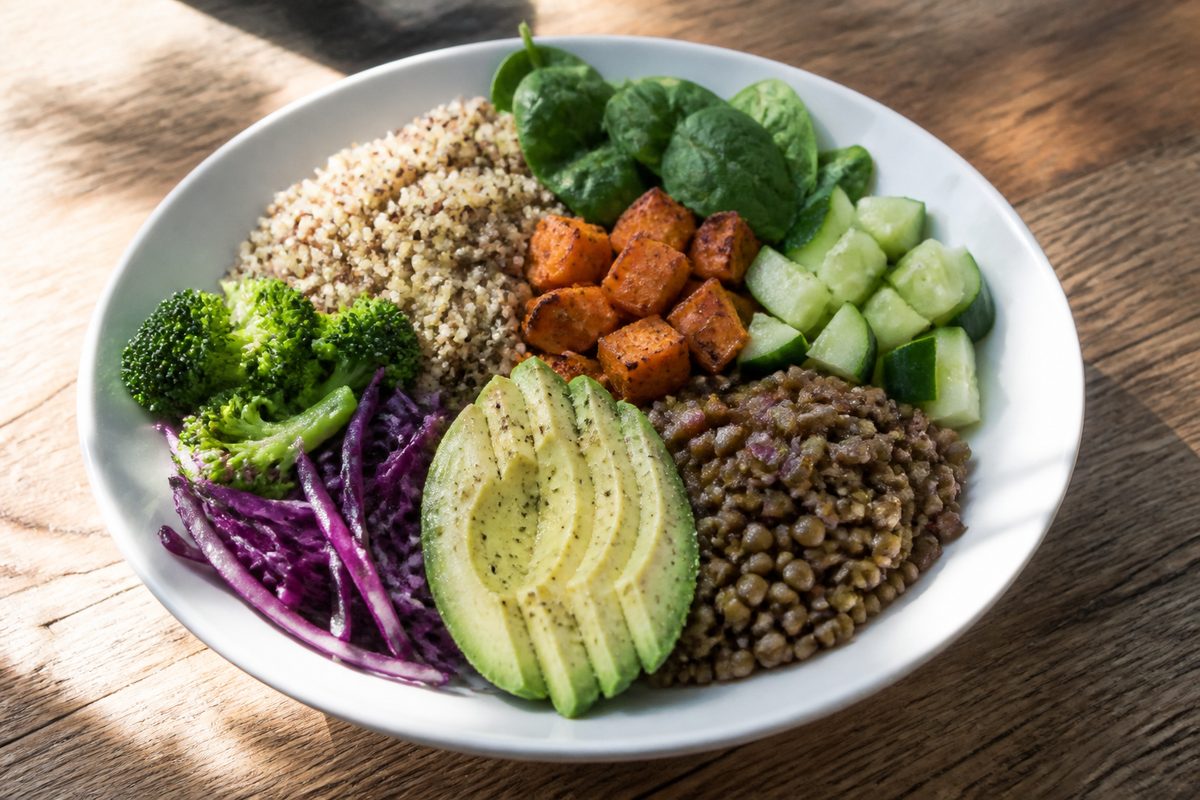
What can I eat that will fill me up but is healthy?
Read article →
How to reduce MS symptoms?
Read article →
Can fasting help autoimmune disorders?
Read article →
Does fasting help male fertility?
Read article →