What Is the Best Time to Fast for Weight Loss? (Evidence-Based Answer)
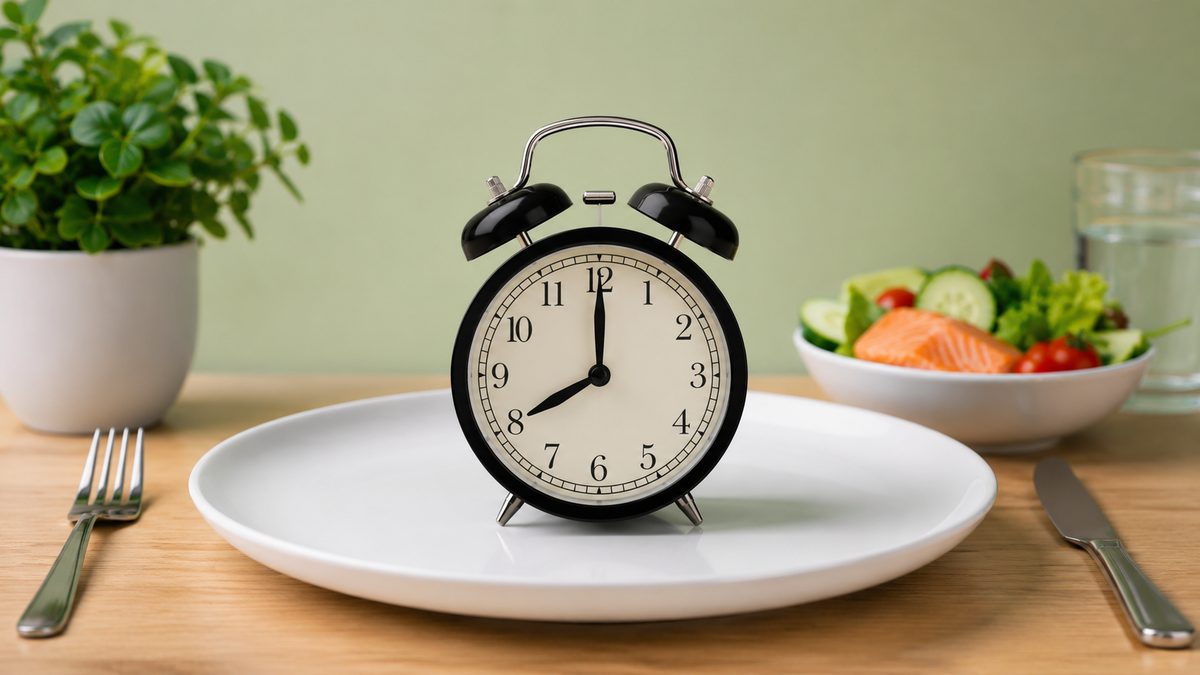
The best time to fast for weight loss is during the evening and overnight hours, with eating concentrated between roughly 8:00 AM and 2:00, 4:00 PM. This approach, called early time-restricted eating, aligns your meals with the hours when your body handles insulin best and burns fat most efficiently. A 2020 review of 23 studies found that time-restricted eating produced an average 3% weight loss and fat loss, with 80% of participants sticking to it and a spontaneous 20% drop in calories eaten, without anyone trying to eat less. The timing itself drives real metabolic change. Separate from calorie reduction.
Why does eating earlier in the day produce better fat loss?
Your body runs on a 24-hour internal clock called the circadian rhythm. This clock controls when your cells are most sensitive to insulin, when your metabolism runs hottest, and when your body is primed to burn stored fat. In the morning through early afternoon, insulin sensitivity peaks. That means the same meal eaten at 8:00 AM causes a smaller blood sugar spike and less fat storage than the same meal eaten at 8:00 PM.
A 2025 review confirmed that intermittent fasting improves insulin sensitivity, reduces inflammation, and shifts fat metabolism by syncing eating with your body's natural clock. Disrupting your sleep schedule weakens these effects. The clock itself is doing part of the work.
When you fast through the evening and overnight, your body depletes its short-term glucose stores and shifts into fat-burning mode. The longer that window runs, ideally 16 to 20 hours, the more time your body spends burning fat rather than dietary carbohydrates. A 2017 review found that extending the overnight fast creates lasting metabolic improvements through effects on your circadian system, gut bacteria, and sleep quality.
Is it better to fast in the morning or at night for weight loss?
Fasting at night produces better results than skipping breakfast. This is one of the most commonly misunderstood points in the intermittent fasting space.
Many people default to skipping breakfast and eating from noon to 8:00 PM. That's a late time-restricted eating window, and it runs directly against your body's clock. You're eating your largest meals when insulin sensitivity is lowest and your metabolism is winding down.
early time-restricted eating flips this. You eat from 8:00 AM to 2:00 or 4:00 PM, then fast through the evening and overnight. A 2023 trial with 209 adults at risk of type 2 diabetes compared this approach, eating 30% of daily calories between 8:00 AM and noon, then fasting for 20 hours on three days per week, against standard calorie restriction. Both groups ate the same total calories. The early fasting group showed significantly better blood sugar control, lower HbA1c, lower fasting glucose, and reduced insulin resistance. Same calories, better metabolic outcome, because of when the eating happened.
Does fasting in the morning burn more fat than fasting at night? No. The overnight and evening fast is where fat burning accelerates. Morning is when your body is most metabolically active and ready to process food well. Fasting through the night and eating in the morning is the combination that works.
How many hours should you fast per day to lose weight?
A 12-hour overnight fast is the minimum that produces measurable metabolic benefit. Most research showing meaningful weight loss uses 14 to 20-hour fasting windows.
For practical purposes, a 16-hour fast with an 8-hour eating window (for example, 8:00 AM to 4:00 PM) is the most studied and most sustainable starting point. A 2025 network meta-analysis of 99 trials covering 6,582 adults confirmed that intermittent fasting, whether time-restricted eating, alternate-day fasting, or whole-day fasting, produced consistent weight loss across diverse populations.
If you have type 2 diabetes or prediabetes, a 20-hour fast on three days per week, structured around early eating, produced the strongest improvements in blood sugar and insulin function in clinical trials. That's a more aggressive protocol and should be done with medical supervision.
For most people starting out, the progression looks like this:
- Start with a 12-hour overnight fast (for example, 7:00 PM to 7:00 AM) for two to three weeks.
- Extend to 14 hours by moving your last meal to 6:00 PM or your first meal to 9:00 AM.
- Work toward 16 hours once the shorter window feels easy.
- Keep your eating window anchored to the morning and early afternoon, not the evening.
What is the most effective intermittent fasting schedule for weight loss?
Based on the current evidence, early time-restricted eating with a 16 to 20-hour fasting window is what works best in practice. The eating window runs from roughly 8:00 AM to 2:00, 4:00 PM. The fast covers the rest of the day and overnight.
Combining this with protein pacing, spreading adequate protein across your eating window, amplifies results further. A 2023 trial found that intermittent fasting with protein pacing produced 9% weight loss and 33% reduction in visceral belly fat, compared to 5% weight loss and 14% belly fat reduction in the calorie restriction group. Both groups ate the same weekly calories and exercised the same amount. The structure of when and how protein was distributed made the difference.
Alternate-day fasting and 5:2 fasting (eating normally five days, restricting heavily on two) also produce weight loss, but they're harder to sustain and don't consistently outperform daily time-restricted eating when adherence is matched.
What is the best time to start a fast for weight loss?
Finish your last meal at least 3 hours before bed. If you go to sleep at 10:00 PM, your eating window should close by 7:00 PM at the latest. This gives your digestion time to settle, supports better sleep quality, and extends the overnight fat-burning window.
A 2025 trial with Filipino adults with type 2 diabetes used a circadian-based protocol where participants started eating within 2 hours of waking and stopped eating 3 hours before bed. This approach improved blood sugar control and cardiovascular markers better than nutrition advice alone. The anchoring points, wake time and bedtime, are more practical than fixed clock times for most people, since sleep schedules vary.
In my experience working through the research on this, the evening cutoff is the harder habit to build. Most people find it easier to delay breakfast than to stop eating after dinner. Starting with the evening cutoff first tends to produce faster early results and builds momentum.
Should you fast before or after a workout for weight loss?
For fat loss specifically, training in a fasted state, typically in the morning before your first meal, increases fat oxidation during the session. Your glycogen stores are lower after an overnight fast, so your body draws more heavily on fat for fuel.
That said, fasted training isn't dramatically superior for total fat loss over weeks and months. What matters more is that your workout happens and that your eating window stays anchored to the morning and early afternoon. If training fasted makes you feel weak or reduces your workout quality, eat a small protein-focused meal first and train within your eating window.
For strength training and muscle retention, eating protein within your eating window after training is more important than whether the session was fasted. The circadian alignment of your eating window matters more for body composition than the precise relationship between your meal and your workout.
Does the timing of fasting matter if total calories are the same?
Yes. This is the finding that most articles on intermittent fasting miss or understate.
The 2023 trial comparing early time-restricted eating to calorie restriction used matched calorie intake across both groups. The early fasting group still showed significantly better insulin sensitivity, blood sugar control, and metabolic markers. The 2023 protein pacing trial also matched weekly calories between groups, yet the fasting group lost nearly twice as much visceral fat.
What I found in reviewing this evidence is that the metabolic benefit of early fasting isn't just about eating less. Your body's clock drives changes in how fat is stored and burned, how insulin functions, and how inflammation behaves. These changes respond to timing independently of calorie intake. That said, combining circadian-aligned fasting with moderate calorie reduction (around 70% of your usual intake) produces the strongest fat loss outcomes in clinical trials.
Who benefits most from early time-restricted eating?
People with type 2 diabetes, prediabetes, or insulin resistance see the largest metabolic gains from early time-restricted eating. The improvements in HbA1c, fasting glucose, and insulin sensitivity are clinically meaningful and appear within 5 to 6 months of consistent practice.
People who've tried calorie restriction repeatedly without lasting results often do better with time-restricted eating because the structure removes decision fatigue. The 80% adherence rate across studies is higher than most calorie-counting interventions achieve.
Shift workers and people with irregular sleep schedules get less benefit because circadian disruption blunts the metabolic effects. If your schedule varies significantly week to week, stabilizing your sleep and wake times is a prerequisite for getting the most from fasting timing.
FAQ
Can I drink coffee or water during the fast?
Water, black coffee, and plain tea don't break a fast in terms of metabolic effect. They don't trigger insulin release or interrupt fat burning. Adding milk, sugar, or cream ends the fast.
Will skipping breakfast slow my metabolism?
No. Short-term fasting doesn't reduce metabolic rate. Prolonged severe calorie restriction does, but a 16-hour fast doesn't. The evidence consistently shows that time-restricted eating preserves or improves metabolic function.
How long before I see results from fasting?
Most people notice changes in energy and appetite within two to three weeks. Measurable weight loss typically appears within six to nine weeks of consistent early time-restricted eating. Blood sugar and insulin improvements in clinical trials appeared within five to six months.
Is early time-restricted eating safe for everyone?
It's not appropriate for people who are pregnant, breastfeeding, have a history of eating disorders, or are underweight. People on diabetes medications or insulin need medical supervision because fasting changes blood sugar in ways that can require medication adjustment. For everyone else, a 12 to 16-hour overnight fast is generally well tolerated.
What if I can't eat breakfast early due to my schedule?
Anchor your eating window to your wake time rather than a fixed clock time. Eat within 2 hours of waking and stop eating 3 hours before bed. This circadian anchoring captures most of the benefit even if your schedule shifts.
Does exercise change when I should fast?
Not significantly. Keep your eating window in the morning and early afternoon regardless of when you train. If you train in the evening, a small protein meal immediately after is reasonable, but try to keep it within your eating window rather than extending eating into the night.
The one thing to do this week
Set a hard stop on eating three hours before bed tonight. That single change starts extending your overnight fast immediately, costs nothing, and is the foundation every other fasting strategy builds on. Once that feels normal, move your eating window earlier by one hour at a time until you're eating between 8:00 AM and 4:00 PM. The research is consistent. Earlier eating and longer overnight fasting is where the real metabolic shift happens.
Sources

What snack is filling but not fattening?
Read article →
What can I eat that will fill me up but is healthy?
Read article →
How to reduce MS symptoms?
Read article →
Can fasting help autoimmune disorders?
Read article →
Does fasting help male fertility?
Read article →