What snack has the most energy?
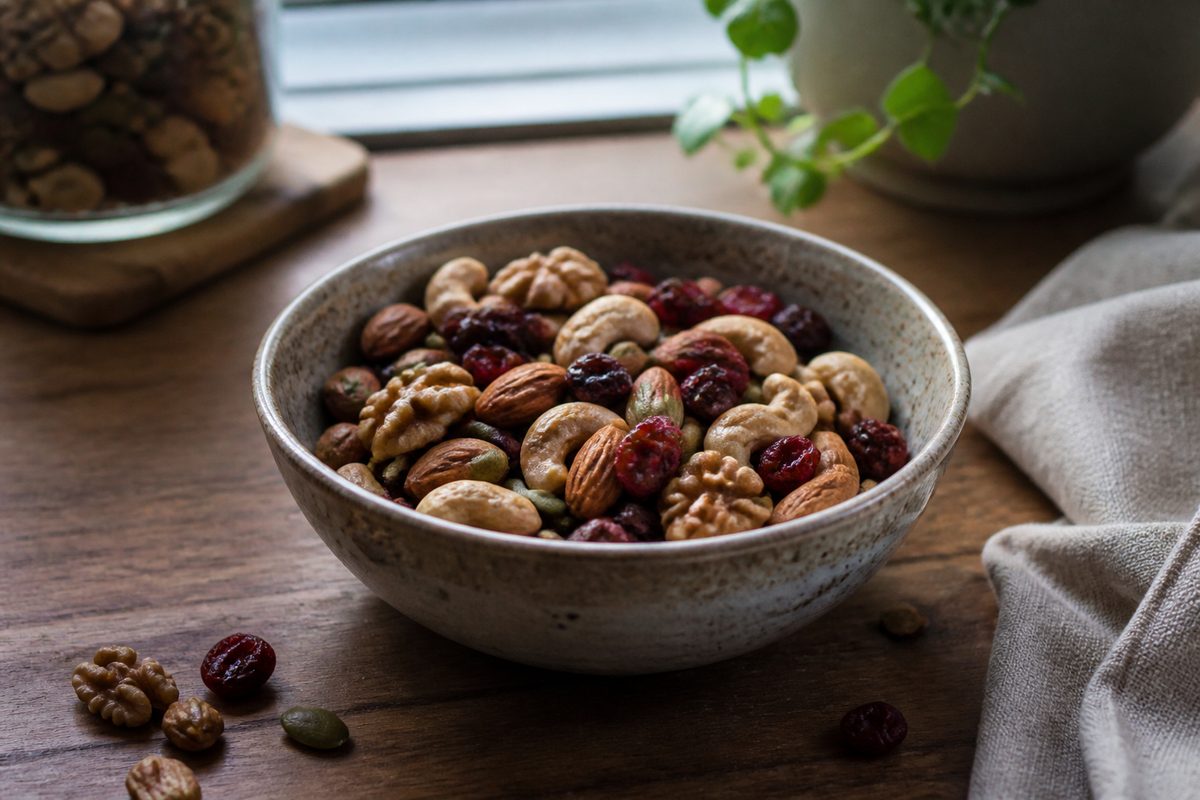
Macadamia nuts have the most energy among common whole-food snacks, with about 700 to 750 calories per 100 grams. They come out on top because much of their weight is fat, which holds more than twice the energy per gram of protein or carbohydrate. A large serve can pack as much energy as a full meal, so how much you eat matters just as much as what you eat.
Here, energy means stored food energy measured in calories. If you mean a snack that gives you a quick lift, the answer may be different. Sweet food can enter the blood faster, while macadamias release energy at a slower pace. Energy density and speed aren't the same thing.
What does “most energy” mean on a food label?
Food energy shows how much fuel a food can give you. In Australia, labels tend to list it in kilojoules, sometimes with calories beside that number. One Calorie on a food label equals about 4.2 kilojoules.
Scientists work out this energy from the nutrients in the food. Fat gives about nine calories per gram. Carbohydrate and protein each give about four calories per gram. Water gives none. Fibre gives less usable energy than normal carbohydrate.
That's why dry, fatty foods sit at the top. They have little water and squeeze lots of fat into a small weight. Fresh fruit has far more water, so each bite gives fewer calories even when it tastes sweet.
You can measure a snack in two useful ways:
- Energy per 100 grams shows which food is most energy dense.
- Energy per normal serving shows how much you are likely to eat.
- Energy by volume shows how much fits in your hand, bowl, or bag.
- Available energy describes how much your body can digest and use.
The first measure puts macadamias well ahead among familiar whole foods. The others show why a small packet may hold far more fuel than you'd guess.
Why do macadamias rank above most other snacks?
A macadamia kernel is about three-quarters fat by weight. It also holds little water. Together, that gives it an energy density of roughly seven calories per gram, though the exact figure changes by variety and product.
Walnuts, by comparison, often give about 650 calories per 100 grams. Pecans sit near 690. Peanuts usually give around 570 to 600. Milk chocolate often supplies about 530 to 580. Potato chips tend to land near 500 to 550. Dried fruit is usually closer to 250 to 350.
Nutrition databases may list a macadamia as a Nut (fruit). In daily speech, most people just call it a nut. The name doesn't change its energy value, but you may see it in food databases when comparing products.
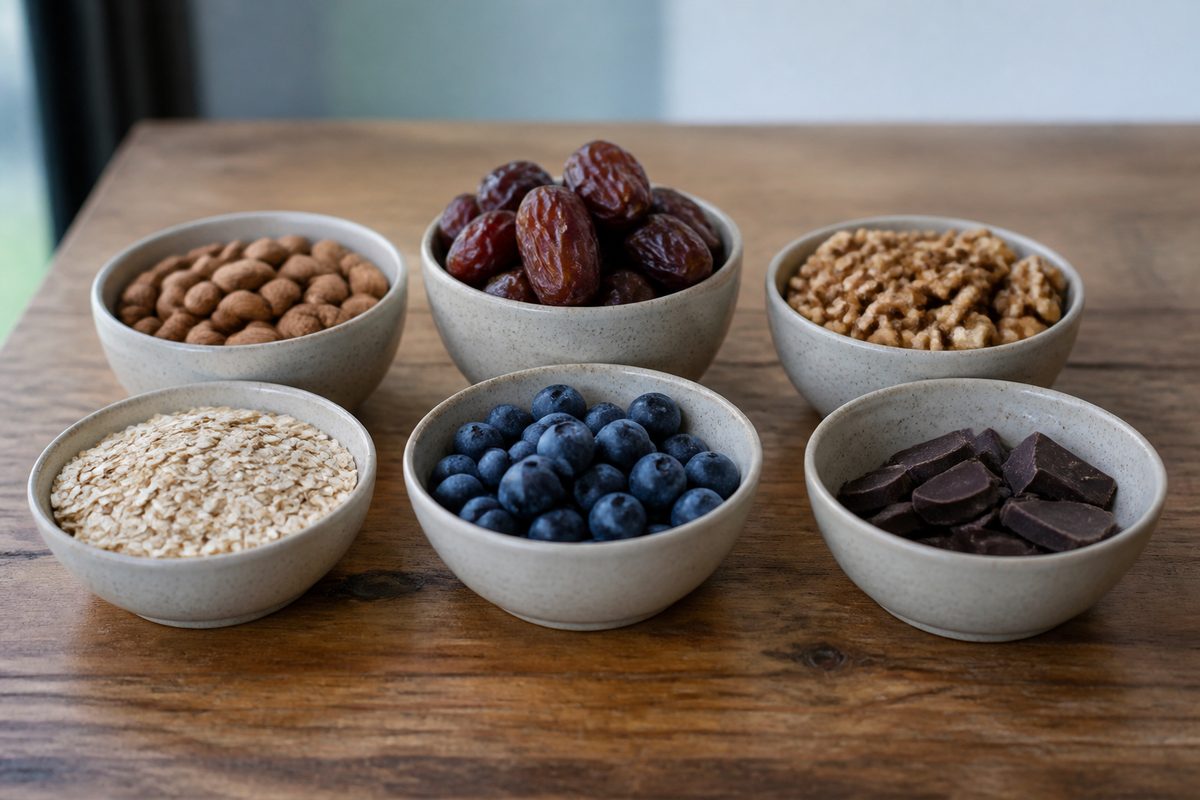
Macadamias also beat many nut bars, as bars often include oats, dried fruit, protein powder, or syrup. Those ingredients may add sugar, but they tend to cut the calories per 100 grams by taking the place of some fat. A chocolate-coated nut bar can get close, though its serving is often much smaller than a loose handful.
Could another snack contain even more energy?
Yes, if you include products made mostly from pure fat. Butter and cooking oil can give more than 700 calories per 100 grams. Oil reaches about 900 because it's almost pure fat. But few people eat either one alone as a snack, so they're not useful answers to a normal snack question.
Some nut butters, seed pastes, coconut products, chocolate spreads, and high-fat sweets can come close to macadamias. Their exact place depends on the recipe. Added water, sugar, milk solids, or fibre cuts the amount of fat in each 100 grams.
Dryness counts too. Dried coconut has far more energy per 100 grams than fresh coconut flesh because drying takes water out. The food hasn't gained fuel. The same energy is simply packed into less weight.
Many comparisons miss this point. The winner can change when water leaves a food. Compare equal edible weights in the form you'll eat, instead of putting a fresh product against a dried one.
How much energy is in a normal handful?
A 30-gram handful of macadamias gives about 215 calories, or roughly 900 kilojoules. A 50-gram snack bag may hold around 360 calories. A 100-gram bag can pass 700 calories, enough to replace a large share of one person's daily food intake.
Handfuls aren't standard units. A small cupped hand might hold 20 grams. One deep grab from a packet can scoop up more than 50 grams. That's a gap of over 200 calories, even though both amounts can feel like one serving.
Picture someone adding macadamias to yoghurt. They pour from the bag for a few seconds and call it one serving. Yet the bowl gets 55 grams, adding close to 400 calories before the yoghurt or fruit is counted.
There's nothing wrong with that meal if the person needs the fuel. The snag is that the amount doesn't match their estimate.
Weighing one serving just once can sort this out. Put 30 grams in your usual bowl or hand, then notice how much space it fills. Once you know that visual cue, you don't need to weigh every snack.
Does the highest-calorie snack give the best usable fuel?
The highest stored energy helps when you need lots of fuel in very little space. It doesn't mean that snack fits every job.
Fat slows how fast food leaves the stomach. So macadamias can feel steady and filling, but they aren't as handy when someone needs to digest food fast before hard exercise. A large, fatty serving may sit heavily during running, cycling, or a gym session.
Carbohydrate is easier to use during tough activity. An athlete may do better with a lower-calorie banana, bread, or sports food near training. That snack has less total energy, but its carbohydrate can become ready to use sooner.
On a long hike, things change. Macadamias carry heaps of energy without using much pack space. Their low water level also cuts weight. A hiker can team them with a carbohydrate food and nibble small amounts over several hours.
Here's another point snack lists often miss. Your body can't judge food by calorie count alone. Timing, digestion, and the task at hand decide whether that energy is useful right then.
When is an energy-dense snack a smart choice?
Macadamias and similar foods can help when appetite is low but energy needs are high. That may happen during heavy training, physical work, travel, or recovery from an illness that cut food intake. A small serving adds plenty of fuel without calling for a big plate.
They may also work for people trying to gain weight. Adding 30 grams next to an existing meal is often easier than pushing through another full meal. Nut butter can do the same job when chewing is hard.
Energy-dense food is useful on trips where storage and space are tight. Nuts handle crushing better than many fresh foods and don't need a fridge if kept dry. Plain or lightly salted types are easier to judge than products covered in sugar or oil.
People with a nut allergy must avoid macadamias and pick a safe choice. Tahini, seed butter, cheese, avocado, dried coconut, or a suitable packaged snack may give concentrated energy, though calorie levels differ. Read the allergy statement because factories may process several products on shared equipment. For allergy-safe alternatives and personalized guidance, explore energy-dense snack options.
When can “most energy” become too much?
A food can be good for you and still give more energy than you meant to eat. Macadamias contain mostly unsaturated fat and offer minerals, but portions are hard to track from a large open packet.
The trouble often starts when someone snacks while driving, watching a screen, or working. The food needs little chewing, the packet stays close, and there's no obvious place to stop. A 30-gram plan can turn into 100 grams without feeling like a full meal.
Pre-portioning works better than counting on willpower. Tip the planned amount into a small container, then put the main bag away. If it needs to last several days, split the bag when you first open it.
Flavoured coatings can shift the choice as well. Honey, chocolate, or seasoning may make the nuts easier to overeat. Added sugar can lift carbohydrate, while added oil may lift total energy. The nutrition panel tells you what's really there.
Do whole nuts release every listed calorie?
Not always. Standard label figures estimate the energy held in food, but digestion isn't perfect. Some fat in whole nuts may stay locked inside plant cell walls and leave the body without being absorbed.
Chewing makes a difference. Finely ground nut butter breaks open more cells, which may help the body absorb more of the listed energy. Whole nuts need more chewing and might release a little less. Roasting and processing can also change how easily the food breaks apart.
That doesn't make calorie labels useless. They're still the best everyday tool for comparing snacks. It simply means the physical form of a food can change how much your body gets.
This detail often vanishes when products are ranked down to the final calorie. A database may show a precise number, but growing conditions, roasting, recipe changes, and digestion all cause small shifts. The ranking is clear without treating that figure as exact for every kernel.
What should you look for when buying the highest-energy option?
Pick a product with an ingredient list that fits your goal. Plain macadamias make the source of the energy easy to see. Roasted ones are fine too, though oil-roasted products may have extra fat, while salted types can carry much more sodium.
Look at the pack size before you buy. A resealable 200-gram bag can hold more than 1,400 calories. Small packs cost more per gram but make portion control easy. A large pack works well if you split it up at home.
Check freshness too. Oils in nuts can turn rancid after long contact with heat, air, or light. Keep opened macadamias in a sealed container. A fridge or freezer can help them last longer, especially during warm weather.
Throw out nuts that smell like paint, stale oil, or chemicals. Rancid nuts may not cause an immediate illness, but their taste and quality have broken down.
What is the practical answer for your next snack?
Pick macadamias when you want the most food energy from a common whole-food snack. Use about 30 grams for a compact serving, or add more when your training, work, or weight goal needs extra fuel.
If you want to eat less energy, don't treat this result as a list of banned foods. Try a smaller portion, or pair a few macadamias with a food that takes up more space. The nuts add flavour and staying power while keeping the whole snack easier to judge.
Action: measure 30 grams of macadamias once, note what that serving looks like, and use the label to adjust it to your actual energy needs.
Common questions
What snacks help with tiredness?
Try a banana with peanut butter, yogurt with fruit, or nuts with whole-grain crackers. These snacks mix quick fuel with protein or healthy fat for longer energy.
What to eat to get immediate energy?
A banana, orange, dates, or a slice of toast can give you quick energy. Add yogurt or peanut butter to help the energy last longer.
What are 5 high energy foods?
Five high-energy foods are nuts, peanut butter, oats, bananas, and eggs. Nuts and peanut butter have the most energy in a small serving.
How to boost energy in 5 minutes?
Drink a glass of water and eat a piece of fruit or a few dates. A short, brisk walk or some stretching can also help you feel more awake.
What snack is filling but not fattening?
Read article →
What can I eat that will fill me up but is healthy?
Read article →
How to reduce MS symptoms?
Read article →
Can fasting help autoimmune disorders?
Read article →
Does fasting help male fertility?
Read article →