Why Is 16 Hours the Magic Number for Fasting? What Science Actually Says
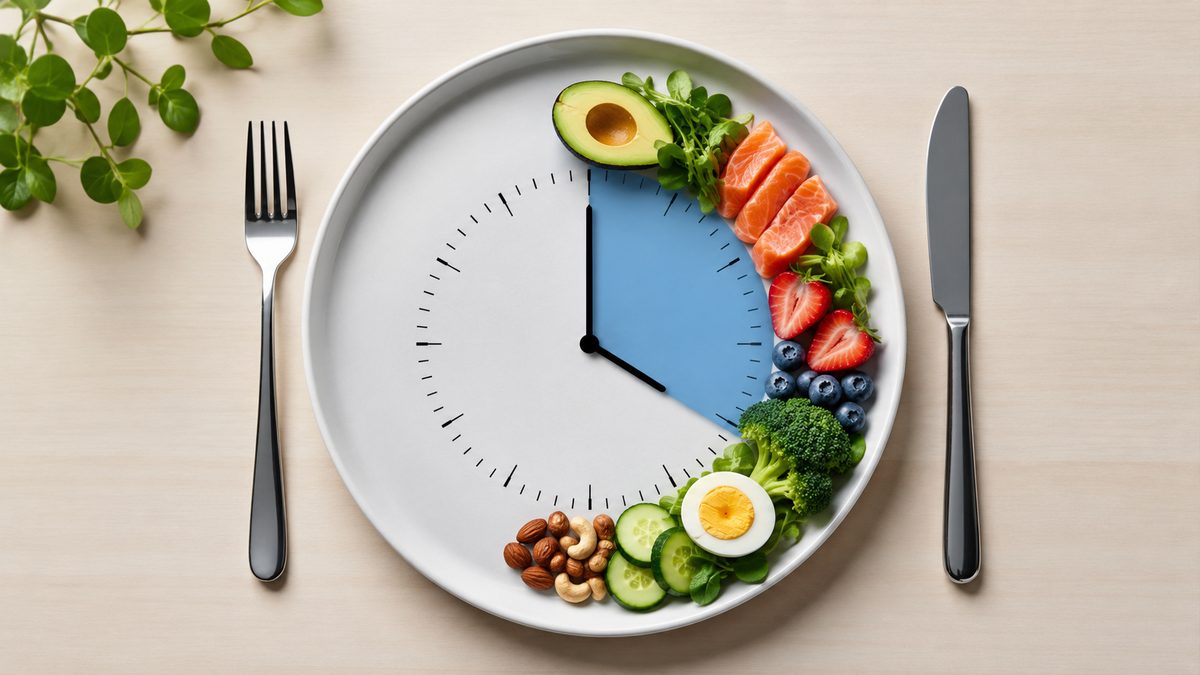
16 hours isn't magic. It became popular because it hits a practical sweet spot: long enough to trigger real metabolic changes, short enough that most people can actually stick to it. The real threshold, according to research, is around 12 hours. That's when your body exhausts its stored glucose and shifts to burning fat and producing ketones. The 16:8 plan (16 hours fasting, 8 hours eating) works because it clears that threshold with room to spare, fits a normal daily schedule, and aligns with your body's natural circadian rhythm.
If you're doing 14 hours and wondering whether you're missing out, the honest answer is probably not. And if 16 hours feels easy, moving to 18 is unlikely to hurt. What matters most is consistency and eating at predictable times each day.
What Happens to Your Body After 16 Hours Without Eating?
The changes that happen during a 16-hour fast don't all switch on at the 16-hour mark. They build gradually from the moment your last meal is digested.
In the first 4 to 8 hours, your body processes the food you ate and insulin levels drop. Between 8 and 12 hours, liver glycogen, your stored glucose, starts running low. Around the 12-hour mark, your body crosses into a fat-burning state. It begins producing ketones, which your brain and muscles can use as fuel instead of glucose.
By 16 hours, you're well into that fat-burning window. Insulin is low, ketone production is active, and your cells are under mild metabolic stress. The kind that triggers repair processes. One of those processes is autophagy, where cells break down and recycle damaged components. Research suggests autophagy ramps up during extended fasting, though the exact timeline varies between individuals and is difficult to measure directly in humans.
The 16-hour mark isn't a biological trigger point. It's simply a duration that reliably keeps you in the metabolic state that starts at 12 hours.
Is 16:8 Intermittent Fasting Backed by Science?
Yes, with some important context. A 2022 review covering time-restricted eating found consistent benefits for metabolic health: improved insulin sensitivity, lower blood pressure, and better lipid profiles. A 2021 umbrella review of 130 studies found that intermittent fasting protocols, including time-restricted eating, produced 1 to 8 percent body weight loss and reduced caloric intake by 10 to 30 percent.
A 2025 network meta-analysis of 99 trials involving 6,582 people compared alternate-day fasting, time-restricted eating, and whole-day fasting against standard calorie restriction. All fasting approaches produced meaningful weight loss. None outperformed the others in a clinically significant way.
So the science supports fasting as a strategy. It doesn't single out 16 hours as the optimal window. A 2023 review noted that time-restricted eating studies vary widely in design, use small sample sizes, and rarely follow participants long enough to draw firm conclusions about which window length is best.
The honest takeaway is that 16:8 is well-studied relative to other windows, which is partly why it has the strongest evidence base. That doesn't mean it's biologically superior to 14:10 or 18:6.
Does Fasting for Exactly 16 Hours Trigger Autophagy?
Fasting does stimulate autophagy, but there's no evidence that 16 hours is the specific threshold where it switches on. Animal studies show autophagy increasing significantly after extended fasting, and human research supports the idea that it ramps up during caloric restriction and fasting states. The process likely begins building after the 12-hour mark when ketone production starts, and continues increasing the longer the fast extends.
Practically speaking, a 16-hour fast probably does support autophagy more than a 12-hour fast, simply because you spend more time in the fasted state. But a 20-hour fast would likely support it more than a 16-hour fast. The relationship appears to be a gradient, not a switch.
Anyone selling a specific autophagy protocol built around exactly 16 hours is working ahead of the evidence. The science says fasting promotes autophagy. It doesn't say 16 hours is the dose.
How Does 16-Hour Fasting Compare to 12-Hour or 24-Hour Fasting?
Here's where the research gets genuinely useful.
A 12-hour fast is the minimum threshold where meaningful metabolic benefits begin. Longo and Panda found that eating within a window that allows more than 12 hours of fasting each day produces measurable benefits for circadian alignment and metabolic health. Finish dinner at 7pm, eat breakfast at 7am. Almost everyone can do that. The downside is that you spend less time in the fat-burning state compared to longer fasts.
A 16-hour fast extends the fat-burning window by four hours. Most people achieve this by skipping breakfast or eating an early dinner. The metabolic benefits documented in research, lower blood pressure, improved insulin sensitivity, reduced triglycerides, better cholesterol, are well-supported at this duration. It's also the most studied window in time-restricted eating trials, which gives it a stronger evidence base by default.
A 24-hour fast shifts the body into deeper ketosis and may amplify autophagy and cellular repair. Longo and Panda note that fasting beyond 24 hours increases ketone production significantly. But 24-hour fasts are harder to sustain regularly, carry a higher risk of muscle loss if protein intake isn't managed, and aren't appropriate for everyone. The 2021 umbrella review found that alternate-day fasting, which often involves near-complete fasting on alternate days, produced similar weight loss outcomes to shorter daily fasting windows.
Longer fasts aren't automatically better. They're harder to maintain, and consistency matters more than duration for long-term outcomes.
Why Is 16 Hours Considered the Optimal Fasting Window?
The word optimal is doing a lot of work here. Clinical consensus suggests 16 hours became the default recommendation because it clears the 12-hour metabolic threshold by a meaningful margin, fits naturally into a daily schedule without requiring extreme behavior change, and has accumulated more research attention than other windows.
Skipping breakfast and eating between noon and 8pm, or eating between 8am and 4pm, both are 16:8 patterns that most working adults can manage without disrupting social eating. That practicality matters. A fasting window you can maintain for months produces better outcomes than a longer window you abandon after two weeks.
There's also a circadian angle. Research on time-restricted eating consistently finds that eating earlier in the day, aligning food intake with morning and midday rather than evening, produces better metabolic outcomes than the same caloric intake eaten later. A 16-hour fast that ends at noon and starts at 8pm captures this advantage better than one that runs from 10pm to 2pm the next day.
When I shifted my eating window earlier, the difference in energy and sleep quality was noticeable within a week. The science on circadian alignment backs that up.
Can Everyone Benefit from a 16-Hour Fasting Window?
Most healthy adults can benefit from 16-hour fasting as a daily practice, but it's not appropriate for everyone. People who should approach fasting carefully or avoid it include those with a history of disordered eating, people who are pregnant or breastfeeding, individuals with type 1 diabetes or those on insulin, and anyone with a condition that requires regular food intake to manage medication.
For people with type 2 diabetes or metabolic syndrome, time-restricted eating has shown genuine promise in clinical trials, improving insulin sensitivity and reducing fasting glucose. But medication adjustments are often needed, and this should be done with medical supervision.
Older adults need to be mindful of protein intake during the eating window. Muscle protein synthesis is less efficient with age, and compressing eating into 8 hours makes it harder to hit adequate protein targets across the day. This doesn't make fasting off-limits, but it does mean the eating window needs to be planned carefully.
Athletes with high training loads may find that a 16-hour fast limits recovery, particularly if training falls in the fasted state. Some athletes do well with fasted training. Others find performance and recovery suffer. Individual response varies enough that experimentation with attention to performance markers is the right approach.
What the Research Gets Wrong About Fasting Windows
Most articles on this topic either oversell 16 hours as uniquely powerful or dismiss fasting entirely because no single window has been proven optimal. Both miss the point.
The first thing most articles miss is that the quality of your eating window matters as much as its length. A 16-hour fast followed by 8 hours of ultra-processed food won't produce the metabolic benefits documented in research. The studies showing cardiometabolic improvements involved participants eating whole foods or following structured dietary patterns. Fasting isn't a license to eat poorly during the window.
The second thing most articles miss is the circadian dimension. The time of day you eat matters independently of how long you fast. A 2022 review found that aligning eating with daytime hours, when your body's metabolic machinery is most active, amplifies the benefits of time restriction. Two people doing identical 16-hour fasts but eating at different times of day will likely get different results.
The third thing most articles miss is that the research on time-restricted eating is still young. A 2023 review found that most studies are short-term, use small samples, and vary widely in methodology. The benefits are real and consistent across the literature, but the precision implied by recommending exactly 16 hours isn't supported by the data.
How to Start and What Results to Expect
If you're new to fasting, start at 12 hours and add an hour every week until you reach 16. This gives your hunger hormones time to adjust and reduces the chance of energy crashes or irritability in the first week.
Expect real results in 8 to 12 weeks of consistent practice. Based on the clinical literature, that means 1 to 8 percent body weight loss, measurable improvements in fasting insulin and blood glucose, lower blood pressure, and improved lipid markers. These aren't dramatic numbers, but they're clinically meaningful and they compound over time.
If 16 hours feels genuinely difficult after a month, 14 hours isn't a failure. The evidence doesn't support a meaningful difference between 14 and 16 hours for most people. If 16 hours feels easy after a month, trying 18 is reasonable. The evidence doesn't show harm at that duration for healthy adults, and you may get additional benefit from the extended fasted state.
The single most important variable is consistency. Eating at the same times each day, within the same window, does more for your circadian rhythm and metabolic health than occasionally hitting a longer fast.
FAQ
Does it matter when during the day I do my 16-hour fast?
Yes. Eating earlier in the day produces better metabolic outcomes than eating the same calories later. If you can shift your eating window to morning and midday rather than midday and evening, the research suggests you'll get more benefit from the same fasting duration.
Can I drink coffee or tea during the fasting window?
Black coffee and plain tea don't break a fast in any metabolically meaningful way. They don't raise insulin or interrupt fat burning. Adding milk, cream, or sugar does, so keep additions minimal if maintaining the fasted state matters to you.
Will 16-hour fasting cause muscle loss?
Not in healthy adults eating adequate protein during the eating window. Research on time-restricted eating shows fat loss with preservation of lean mass when protein intake is sufficient. The risk increases with very long fasts (beyond 24 hours) or chronically low protein intake.
How long until I stop feeling hungry during the fasting window?
Most people adapt within 2 to 4 weeks. Ghrelin, the hunger hormone, is largely habit-driven and adjusts to your new eating schedule. The first week is typically the hardest.
Is 16:8 fasting the same as calorie restriction?
Not exactly. Time-restricted eating tends to reduce caloric intake by 10 to 30 percent naturally, without counting calories. But the metabolic benefits appear to go beyond what calorie restriction alone explains, likely because of the circadian and hormonal effects of the fasting period itself.
What if I fast for 16 hours but eat a large meal right before the window closes?
Late-night eating works against the circadian benefits of fasting. Your body's insulin response is weaker in the evening, meaning the same meal eaten at night raises blood glucose higher and for longer than the same meal eaten in the morning. Front-loading calories earlier in the eating window is the better approach.
The One Thing Worth Doing
Pick a consistent eating window of at least 12 hours of fasting, shift it as early in the day as your schedule allows, and hold it for 8 weeks before evaluating. That single habit change, done consistently, is what the evidence actually supports. The exact number of hours matters far less than doing it every day.
Sources

What snack is filling but not fattening?
Read article →
What can I eat that will fill me up but is healthy?
Read article →
How to reduce MS symptoms?
Read article →
Can fasting help autoimmune disorders?
Read article →
Does fasting help male fertility?
Read article →