What are the 10 healthiest snacks I can eat?
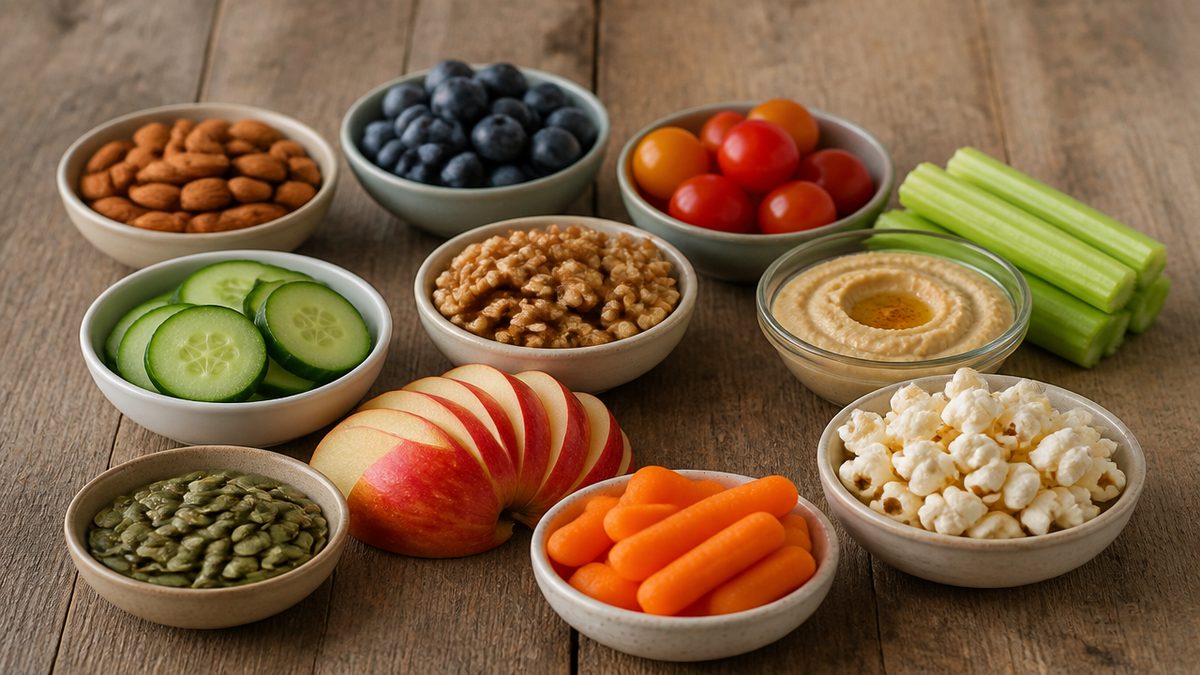
The healthiest snacks are plain Greek yogurt, an apple with peanut butter, raw nuts, hummus with vegetables, eggs, berries with cottage cheese, roasted chickpeas, avocado on whole grain toast, edamame, and homemade oatmeal. Each one gives you useful nutrients without lots of added sugar or heavy Food processing. The right choice depends on your hunger, health needs, and next meal.
A snack should do more than fill a gap. It should support a Healthy diet and taste good enough to eat again. The best choices use basic Food and pair Protein, Dietary fiber, or healthy Fat. That mix slows Digestion and keeps energy more steady.
Portion size still matters. Nuts and peanut butter pack plenty of nutrients, but even a small amount holds lots of energy. Fruit and a Vegetable give you more volume for fewer calories. Start with the serving ideas below, then adjust them for your body and daily activity.
What makes one snack a stronger choice than another?
A strong snack has a job. It might calm hunger, add produce to your day, or help your body recover after exercise. It should give you nutrients that meals often miss, without piling on salt, sugar, or refined flour.
Protein helps build and repair body tissue. Dietary fiber supports bowel health, feeds good gut bacteria, and slows how quickly a meal leaves your stomach. Fat can slow Digestion too, and it helps your body absorb certain vitamins. You don't need all three in every snack, but having at least two often makes it more filling.
Whole foods make this simple. An apple brings water and fiber. Yogurt adds Protein and calcium. Nuts provide unsaturated Fat, minerals, and crunch. That's why a short ingredient list often beats a snack with bold health claims on the pack.
Food processing isn't always bad. Frozen berries, plain yogurt, canned chickpeas, and peanut butter are all processed in helpful ways. What matters is what the process adds or takes away. A product is a weaker daily choice if it loses much of its fiber and gains lots of added sugar, salt, or refined oil.
How does each option earn its place?
1. Why choose plain Greek yogurt?
Plain Greek yogurt packs a large amount of Protein into a small serving. It also gives you calcium, which supports bones and muscles. Some types contain live cultures that may help gut health.
Choose an unsweetened tub and add your own Fruit. Flavoured yogurt may contain several teaspoons of added sugar. A handy serving is about 170 to 200 grams. If plain yogurt tastes too sharp, add cinnamon or a small handful of berries.
This snack works well after exercise or through a long afternoon. If lactose causes pain or bloating, choose lactose-free Greek-style yogurt. Fortified soy yogurt is a good plant-based choice, though the Protein level differs by brand.
2. Why pair an apple with peanut butter?
An apple gives you Dietary fiber, water, vitamin C, and natural sweetness. Peanut butter brings Protein and unsaturated Fat. Put them together, and they'll keep you going longer than apple juice or a sweet biscuit.
Slice one small apple and spread one tablespoon of peanut butter over the pieces. Check the label to make sure peanuts are the main ingredient. A little salt is fine for most people, but you don't need added sugar or palm oil.
Much of the apple's fiber sits in the peel, so keep it on after washing. Whole Fruit also takes longer to eat than juice. Better still, it keeps the plant structure that slows Digestion.
3. What makes raw nuts useful?
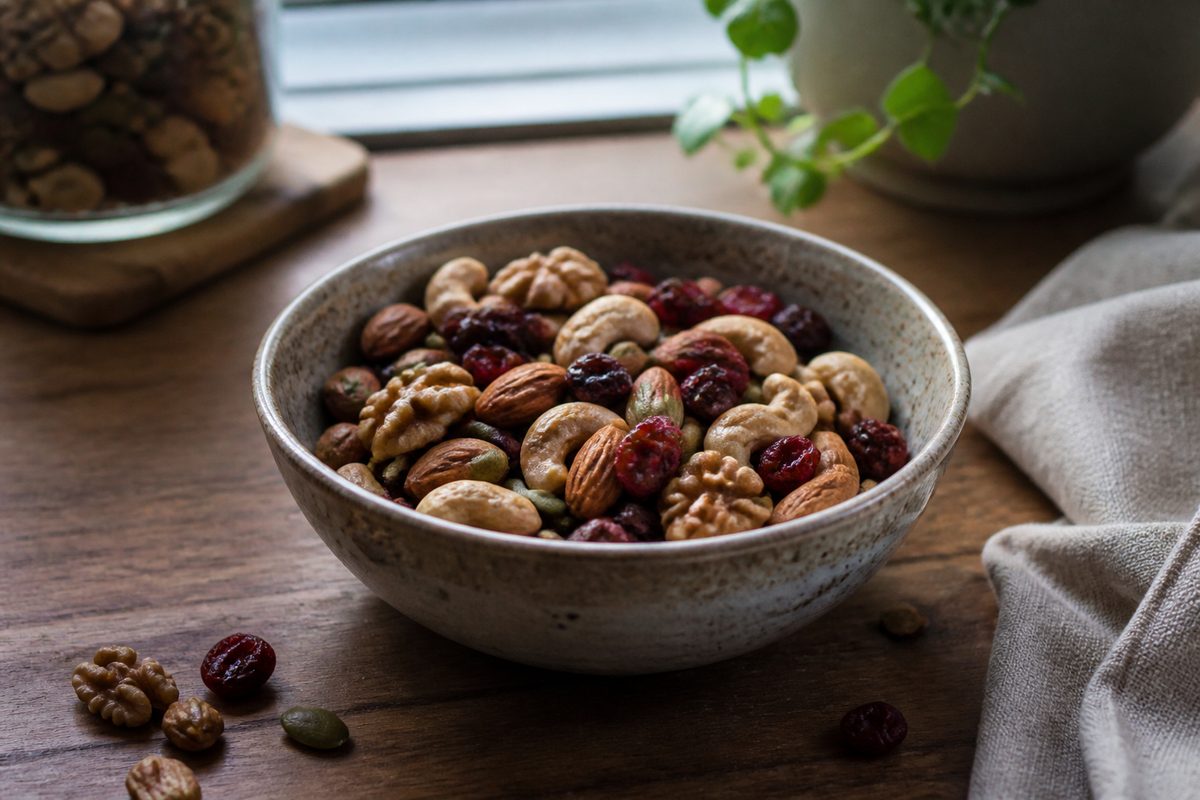
Almonds, walnuts, pistachios, and cashews contain healthy Fat, plant Protein, and minerals. Walnuts also offer a plant form of omega-3 fat. Nuts travel well, and there's no cooking needed.
Keep your serving close to 30 grams, or one small closed handful. It's hard to judge the amount when eating straight from a large bag. Tip the nuts into a bowl instead. No need to count every piece.
Raw and dry-roasted nuts are both good choices. Pick unsalted types if your meals already have plenty of sodium. Anyone with a nut allergy should choose a safe swap, such as roasted seeds.
4. Why eat hummus with vegetables?
Hummus blends chickpeas, tahini, lemon, and olive oil. It gives you plant Protein, Dietary fiber, and unsaturated Fat. Add a crisp Vegetable for volume, water, colour, and a broader range of vitamins.
Try about one-quarter cup of hummus with carrot, cucumber, capsicum, celery, or snow peas. It's an easy way to eat more vegetables without making a full meal.
Store-bought hummus is still a useful Food. Compare labels, as sodium levels can vary a lot. A short list of chickpeas, tahini, oil, lemon, and seasoning is easy to follow.
5. Why keep cooked eggs ready?
One large egg gives about six grams of complete Protein, plus choline, selenium, and vitamin B12. Two cooked eggs make a compact snack after training or when breakfast was light.
Boil several eggs at once, then keep them cold in a covered container. Add pepper, paprika, or a little salt when you're ready to eat. Want more volume and fiber? Pair one egg with cherry tomatoes or a piece of Fruit.
Eggs are often judged only by their cholesterol. For most healthy people, the full eating pattern matters more than one egg. If you have a medical condition or a set cholesterol target, follow your clinician's advice.
6. Why combine berries with cottage cheese?
Cottage cheese brings Protein and calcium, while berries add Dietary fiber, water, and plant pigments. The mix tastes sweet without syrup or a big spoonful of honey.
Use about half a cup of cottage cheese with half to one cup of strawberries, blueberries, raspberries, or blackberries. Frozen berries work well once thawed. They may also cost less outside the growing season.
Cottage cheese can be high in sodium, so compare labels if salt is a concern. Choose a plain version. Low-fat and full-fat types both offer useful nutrients, so pick the fat level that fits your needs.
7. What do roasted chickpeas offer?
Roasted chickpeas pack plant Protein and Dietary fiber into a crunchy snack. They can stand in for chips when you want something savoury. Their fiber also supports regular bowel habits and helpful gut microbes.
Drain and rinse canned chickpeas, dry them well, then roast with a small amount of olive oil and spices. About half a cup is enough for most snack breaks.
If beans are new to your diet, raise the amount slowly. A quick jump in fiber may cause gas. Drink water and build your intake over time so your digestive system can adjust.
8. Why put avocado on whole grain toast?
Avocado gives you unsaturated Fat, fiber, potassium, and folate. Whole grain bread adds more Dietary fiber and a modest amount of Protein. Together, they make a handy small meal when a piece of Fruit won't curb your hunger.
Mash one-quarter to one-half of an avocado onto one slice of toast. Top it with lemon juice, pepper, tomato, or chilli flakes. Check the bread label for whole grain flour near the start of the ingredient list.
Brown bread isn't always whole grain. Some refined loaves get their colour from colouring or a small amount of bran. The ingredient list tells you more than the front of the bag.
9. Why is edamame a smart freezer staple?
Edamame is a young soybean that contains Protein, fiber, folate, and iron. Unlike many plant foods, soy has all essential amino acids. One cup in the pods makes a generous snack, though you don't eat the pods.
Steam frozen edamame, then add lemon, pepper, or a light pinch of salt. Shelled edamame also tastes good cold after cooking. Its firm bite makes you eat more slowly than you would with a soft bar.
Some people avoid soy due to claims about hormones. Normal servings of soy Food are considered safe for most people. But anyone with a soy allergy needs another option.
10. Why make oatmeal as a snack?
Oats are a Whole grain packed with beta-glucan, a type of soluble fiber. This fiber can support healthy cholesterol levels and slow Digestion. Oatmeal works well when you want something warm, mild, and easy to change.
Cook one-third to one-half cup of dry rolled oats with milk or water. Add cinnamon, chopped Fruit, seeds, or a spoonful of plain yogurt. Skip instant sachets that contain a large amount of added sugar.
Oats also solve a common snack problem: craving dessert when you're truly hungry. Warm oats with banana and cinnamon taste sweet, while still giving you fiber and useful nutrients.
How should you choose between these snacks?
Match your snack to the gap you need to fill. Pick Greek yogurt, eggs, cottage cheese, or edamame if your meals have been low in Protein. Choose hummus with vegetables when you haven't eaten much produce. Before a long walk, try oatmeal or whole grain toast for carbohydrate that releases at a steadier pace.
Let your hunger guide the size. Mild hunger may call for one egg or a small piece of Fruit. Strong hunger often needs a combined snack, such as yogurt with berries or avocado toast. If a snack never settles your hunger, it's too small or doesn't have enough Protein, fiber, or Fat.
Medical needs can change the best choice. Someone with a nut allergy must avoid peanut butter and mixed nuts. A person with kidney disease may need to limit potassium, Protein, or phosphorus. Diabetes, coeliac disease, swallowing problems, and digestive disorders may also require personal advice from a qualified dietitian.
Which buying mistakes weaken a healthy choice?
The first mistake is trusting words like natural, protein-packed, or multigrain without checking the label. These terms don't reveal how much sugar, sodium, or fiber is inside. Read the ingredient list and nutrition panel.
The second mistake is turning a useful snack into dessert. Yogurt with berries isn't the same as sweetened yogurt covered in granola, syrup, and chocolate. Oatmeal changes when several spoonfuls of sugar land in the bowl. Extras still count, even when the base Food is healthy.
The third mistake is buying something that doesn't fit real life. A snack only works if you can store it, prepare it, and enjoy it. Keep nuts or roasted chickpeas handy for travel. Choose yogurt, eggs, and cottage cheese when you have cold storage. At home, frozen produce can cut waste.
How can you put this list into action today?
Choose two options that suit your routine. Buy enough for several servings, then put them where you'll see them. Keep washed vegetables at eye level in the fridge. Portion nuts before hunger strikes. Cook eggs while making another meal.
Aim for variety through the week instead of chasing one perfect snack. Different foods give you different nutrients, and switching textures keeps boredom away. A Healthy diet grows from the pattern you repeat.
Your single next step is to replace one usual packaged snack this week with one option from this list and keep the serving ready before you need it.
Common questions
What are the top 10 healthiest snacks?
Ten healthy snacks are apples, bananas, berries, carrots, Greek yogurt, nuts, boiled eggs, oatmeal, hummus, and whole-grain crackers. Choose plain or low-sugar options and keep portions reasonable.
What are the top five healthiest snacks?
Five of the healthiest snacks are fruit, vegetables with hummus, plain Greek yogurt, nuts, and boiled eggs. They give your body protein, fiber, vitamins, and healthy fats.
What are 20 healthy snacks?
Try apples, bananas, berries, oranges, grapes, carrots, cucumber, celery, tomatoes, hummus, Greek yogurt, cottage cheese, boiled eggs, nuts, seeds, oatmeal, popcorn, whole-grain crackers, avocado, or peanut butter. Pick foods with little added sugar and pair two foods for a more filling snack.
What is the healthiest snack to eat all day?
There is no single healthiest snack to eat all day because your body needs different foods. Fruit with nuts or vegetables with hummus is a balanced choice, but eat regular meals too.
What snack is filling but not fattening?
Read article →
What can I eat that will fill me up but is healthy?
Read article →
How to reduce MS symptoms?
Read article →
Can fasting help autoimmune disorders?
Read article →
Does fasting help male fertility?
Read article →